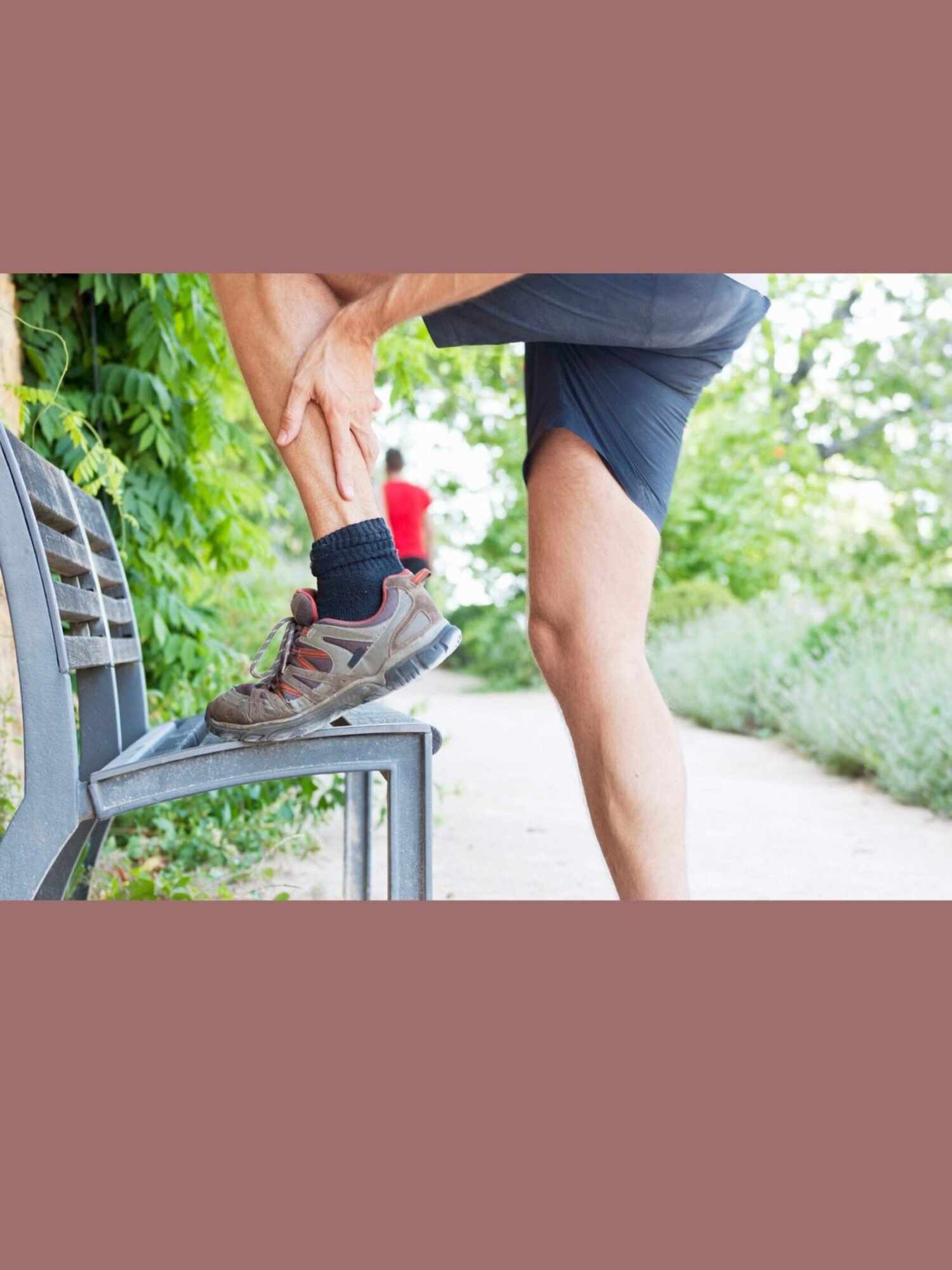

Achilles tendinitis is one of the most stubborn running injuries — a tight, stabbing ache in the calf and heel that can show up out of nowhere, sometimes triggered by something as small as a new pair of shoes. In this guide, learn what Achilles tendinitis actually is, how long recovery really takes, and what consistently helps runners manage it and get back to training.
A tight, stabbing ache in the calf and heel that can show up out of nowhere — sometimes triggered by something as small as a new pair of shoes. Here’s what actually helps.
Achilles tendinitis has a way of sneaking up on you and then refusing to leave. For me, it started with something that seemed completely harmless — a new pair of running shoes, the same model I’d already run two pairs in without issue. This guide covers what’s actually happening in your calf and heel, what helps versus what just takes the edge off, and how to figure out whether you’re dealing with something temporary or something that needs a longer-term strength fix.
What is Achilles tendinitis?
The Achilles tendon takes on enormous load every time your foot pushes off the ground — it’s the tendon most responsible for propelling you forward. When it’s asked to absorb more stress than it’s adapted to, whether from a sudden mileage jump, tight calves, weak lower legs, or a change in shoe drop or cushioning, the tendon becomes irritated and inflamed. That’s tendinitis.
Pain usually shows up either right at the back of the heel where the tendon attaches, or a couple of inches up in the “mid-portion” of the tendon itself. It often feels worse first thing in the morning or after periods of rest, eases somewhat once you’re warmed up, and then can flare again after activity or at the end of a run.
What does it feel like?
How long does Achilles tendinitis last?
Achilles tendinitis has a reputation for being slow and stubborn, more so than a lot of other common running injuries. Part of the reason is that tendons have less blood flow than muscles, so they simply heal more slowly. The other part is that it’s easy to keep re-aggravating it without realizing it, especially if you go looking for a quick fix like a new shoe instead of addressing the underlying strength issue.
🟡 Mild cases
- 3–6 weeks with consistent care
- Caught early, addressed with strengthening right away
- Often able to continue modified, easy running
🔴 Moderate to severe cases
- 2–6+ months of active management
- May require significantly reduced mileage or a full break
- Eccentric strengthening becomes non-negotiable
- Can become chronic if the underlying weakness isn’t addressed
Should you stop running?
This one really depends on severity, and it’s worth being honest with yourself about which category you’re in:
What actually helps
Achilles tendinitis responds best to load management and progressive strengthening — not rest alone. Tendons actually need controlled stress to heal and get stronger; total rest can leave them weak and prone to flaring right back up once you return to running.
💪 5 Exercises & Stretches — the foundation of recovery
These target the calf and Achilles directly, building the strength and flexibility that prevents this from becoming a recurring problem. Consistency matters far more than intensity here.
Eccentric Heel Drops
Stand on a step with your heels hanging off the edge. Rise up onto both feet, shift your weight onto one leg, then slowly lower that heel below the step over 3–4 seconds. Use both feet to rise back up. Do 3 sets of 15 on each leg, once or twice daily.
⭐ The single most evidence-backed exercise for Achilles tendinitis — this is the one to prioritize if you only do one.Seated Calf Raises (Weighted)
Sitting with knees bent at 90 degrees, press through the balls of your feet to raise your heels, adding weight across your knees for resistance. This targets the soleus muscle, deep in the calf, which straight-leg calf raises miss. 3 sets of 15.
⭐ Complements standing calf raises by working a different part of the calf that also feeds into the Achilles.Standing Wall Calf Stretch
Facing a wall with hands pressed against it, step one foot back with the heel flat and leg straight. Lean into the wall until you feel a deep stretch in the calf and up into the Achilles. Hold 30 seconds, 3 times per side.
⭐ Do this before and after runs — tight calves put direct extra load on the Achilles tendon.Resisted Ankle Dorsiflexion (Loaded Ankle Raises)
Sit with legs extended and a resistance band looped around the ball of your foot. Slowly pull your toes toward your shin against the band’s resistance, then release with control. This builds strength through the front of the ankle, which helps balance the load on the Achilles from the opposite direction. 3 sets of 15.
⭐ A good addition once heel drops feel manageable — helps build balanced lower leg strength.Kettlebell Calf Loading Before Runs
Holding a light kettlebell or dumbbell for added load, perform slow, controlled standing calf raises before heading out for a run. This primes the calf and tendon under load rather than stretching cold, which can help reduce that startup tightness.
⭐ A good pre-run warm-up addition once you’re strength-building consistently, rather than a substitute for it.Adjustable Kettlebell / Dumbbell Set
What I use for loaded calf raises before runs and at the gym. A compact adjustable set is nice if space is limited — you don’t need much weight to make these exercises effective.
Shop on Amazon → Affiliate link — I earn a small commission at no extra cost to you. I only share products I personally use and trust. 🤍Resistance Band Set
Used for resisted ankle dorsiflexion and general lower-leg strengthening work. A light-to-medium set is usually enough for these exercises — you’re not trying to max out, just build controlled strength.
Shop on Amazon → Affiliate link — I earn a small commission at no extra cost to you. I only share products I personally use and trust. 🤍Foot & Calf Stretching Strap
The same strap that helps with plantar fascia stretches works well here too — it makes holding a proper calf and Achilles stretch far easier than trying to reach your toes by hand.
Shop on Amazon → Affiliate link — I earn a small commission at no extra cost to you. I only share products I personally use and trust. 🤍🧊 Compression, massage & topicals — for day-to-day relief
None of these fix the underlying tendon issue on their own, but they make managing the tightness and discomfort significantly more bearable while the actual strength work does its job.
Calf Compression Sleeves
What I wear during and after runs to manage that tight, achy feeling in the calf and Achilles. Not a fix, but a genuinely helpful comfort tool, especially post-run.
Shop on Amazon → Affiliate link — I earn a small commission at no extra cost to you. I only share products I personally use and trust. 🤍Massage Gun
Used on the calf (never directly on the Achilles tendon itself) to help release tightness in the surrounding muscle. Helpful for loosening things up before stretching or after a run.
Shop on Amazon → Affiliate link — I earn a small commission at no extra cost to you. I only share products I personally use and trust. 🤍Foam Roller
Essential for calf release. Rolling the calf muscle (again, not the tendon directly) helps reduce the tightness that keeps pulling on the Achilles.
Shop on Amazon → Affiliate link — I earn a small commission at no extra cost to you. I only share products I personally use and trust. 🤍Arnica Gel
Natural anti-inflammatory I apply directly to the calf and Achilles during flare-ups, as part of a daily recovery routine rather than a stand-alone fix.
Shop on Amazon → Affiliate link 🤍⚡ A note on Voltaren
Same rule here as with any injury: Voltaren can genuinely take the edge off during a bad flare-up, but it’s a flare-up tool, not a daily fix. Use it to manage inflammation on your worst days, not as a substitute for the strengthening work that actually addresses the problem.
Voltaren Topical Gel
Save this for your worst flare-up days. Apply to the calf and Achilles as directed — genuinely effective for acute inflammation, but not something to lean on daily.
Shop on Amazon → Affiliate link — I earn a small commission at no extra cost to you. I only share products I personally use and trust. 🤍👟 A note on shoes
It’s tempting to treat Achilles pain as a shoe problem, especially when it starts right after switching pairs — I know because I went down that road myself. A different shoe (particularly one with a different heel-to-toe drop) absolutely can trigger or aggravate this, so it’s worth paying attention to. But if pain returns in a different pair after a few weeks of running, or comes back once you build mileage back up, that’s a sign the shoes were never the whole story. Heel lifts or inserts can sometimes reduce strain on the tendon in the short term while you build strength.
Heel Lift Inserts
Slightly raises the heel to reduce tension on the Achilles tendon in the short term. Meant as a temporary support while you build strength, not a permanent fix.
Shop on Amazon → Affiliate link — I earn a small commission at no extra cost to you. I only share products I personally use and trust. 🤍When to see a PT
How to return to running
The golden rule with Achilles tendinitis: mild discomfort that stays steady or improves during a run can be okay, but sharp pain, or pain that’s worse the next morning, means you’re pushing too hard, too soon.
Morning stiffness minimal before attempting to run again
Consistent eccentric heel drops for at least 2 weeks, pain-free
Short, easy, flat runs only — no speed work or hills yet
Monitor the next-morning test — no worse pain the day after
Build mileage gradually — no more than 10% per week
Keep the strengthening work going — this doesn’t stop once pain is gone
Achilles tendinitis takes patience — and consistency
Of the common running injuries, this is one of the ones where the fix really is boring: controlled loading, calf and ankle strength work, and giving the tendon time to adapt. There’s no shortcut that replaces the eccentric heel drops. Shoes, compression, topicals, and massage all have a place, but they support the real work rather than replace it.
If you’re in the middle of this right now, know that it’s genuinely common and largely manageable — it just asks for more patience than most runners want to give it.
You’ve got this. Be patient with your body and consistent with the work — it pays off. 🩷