


Stress and running have a complicated relationship that most training plans completely ignore. If you’ve noticed that stress and running don’t mix well — that your runs feel harder during stressful weeks, your recovery takes longer, or your motivation disappears — you’re not imagining it. Stress and running affect the same biological systems in your body, which means life stress and training stress add up together whether you want them to or not. Understanding the connection between stress and running is one of the most important things you can do for your performance and your long-term health as a runner. Stress and running affect the same systems in your body. Here’s what cumulative stress load does to your training — and what to do about it.This guide breaks down exactly what cumulative stress does to your training and what you can actually do about it.
Running on Empty: How Stress Outside of Running Affects Your Training
Your body doesn’t separate life stress from training stress — and that changes everything.
This post contains affiliate links. If you purchase through my links, I may earn a small commission at no extra cost to you. I only share things I actually use and love.

Some weeks, just putting one foot in front of the other is enough.
This past week has been a lot. I’m intentionally keeping the details vague, but life has been unusually full in a way that doesn’t shut off. The kind of busy where your brain is still running at 11pm even when the rest of you is exhausted. I’ve had about 4.5 hours of accumulated sleep debt according to my Oura ring. Stress nausea has been messing with my appetite. And yet, I’ve still been lacing up and trying to get my training runs in, which has made something really obvious to me this week: life stress and training stress are not two separate things. They live in the same bucket.
If you’ve ever had a hard week and noticed your runs felt way more difficult than they should have, you’re not imagining it, and you’re not just being soft. There’s real biology behind it, and I want to break it down in a way that actually makes sense.
What Is Cumulative Stress Load?
Your body has one stress response system. It doesn’t sort your stress into neat little categories the way your brain tries to. It doesn’t know the difference between the stress of running a hard tempo workout and the stress of a chaotic week at work or a difficult personal season. To your nervous system, stress is stress, and it all gets pooled together.
Researchers call this cumulative stress load, sometimes referred to as allostatic load. Think of it like a bucket. Every stressor in your life pours into that bucket — your workouts, your sleep debt, your emotional load, your work demands, everything. Training is supposed to pour stress into that bucket intentionally so your body can adapt and come back stronger. But if the bucket is already nearly full from everything else going on in your life, there’s very little room left for training stress to do its job. And when it overflows, that’s when everything starts to feel hard.
This is why stress and running have such a complicated relationship. You can be doing everything right. Hitting your workouts, eating well, staying consistent and still feel like you’re falling apart if life stress is quietly filling that bucket on the other side.
What It’s Actually Doing to My Training This Week
The 4.5 hours of sleep debt I mentioned isn’t just a number. Sleep is when your body does the actual work of recovering from training. Muscle tissue repairs, hormones regulate, your nervous system resets. When sleep goes, everything downstream goes with it. Runs that should feel easy start feeling like a grind. Paces that are normally comfortable feel like you’re working too hard for them.
On top of that, the stress nausea has meant I haven’t been fueling the way I normally do. For anyone in a training block, unintentional undereating is its own problem. Your body needs fuel to perform, and when stress takes your appetite with it, you’re essentially asking your muscles to do more with less. It catches up with you.
Signs That Life Stress Is Affecting Your Running
If you’re wondering whether this is what’s going on for you, here are some of the most common signs that stress and running are clashing in your body right now.
If you’re nodding along to several of these, your body is telling you something real. It’s worth listening to.
What You Can Actually Do About It
This is the part where I want to give you both practical steps and permission to be realistic. Because sometimes the most useful thing isn’t a tip, it’s being told that you don’t have to perform at 100% when life is at 100%.
Something I’ve genuinely been reaching for this week when things feel like too much:
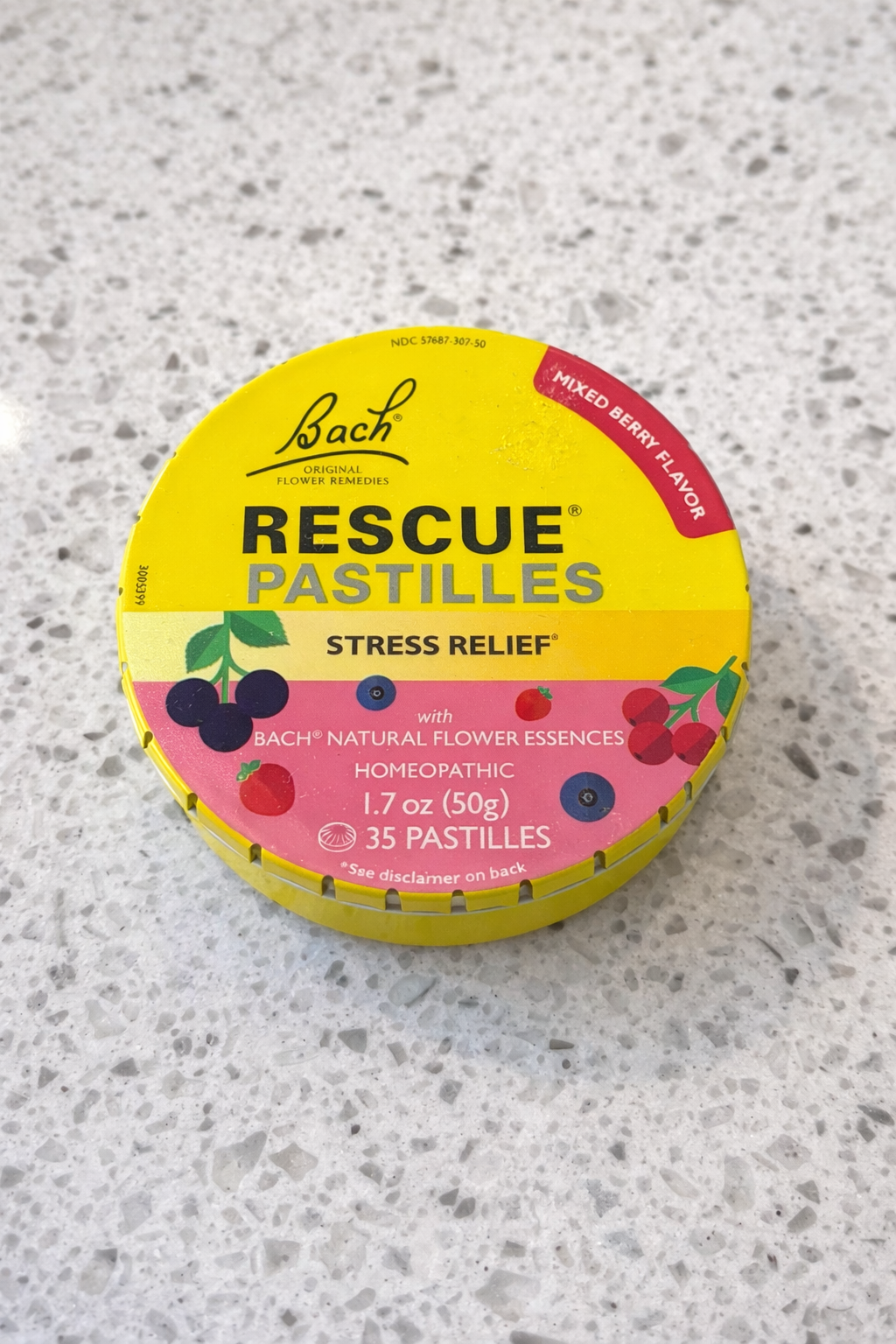
These little lozenges have been in my bag all week. The Bach RESCUE Pastilles use the classic RESCUE Remedy flower essence blend that’s been around for decades. They don’t make you foggy or tired, they just take the edge off a little when that familiar tightness starts creeping in. Honestly kind of a lifesaver during a week like this one.
Give yourself actual grace
This one is the hardest for goal-oriented runners. But sometimes life stress isn’t something you can logic your way out of or supplement away. Things get heavy. Seasons get hard. And there is no hack that fully compensates for a genuinely difficult week. In those moments, the most useful thing you can do is acknowledge what’s happening, be realistic about what your body has to give right now, and resist the urge to punish yourself for not performing at 100%.
You are a whole person, not just a runner. And your training plan was written without knowing what your life would look like this week.
The Stress Your Training Plan Didn’t Account For
Training is cumulative and so is stress. The miles you log, the sleep you get, the food you eat, and the mental load you carry all feed into the same system. When one area takes a hit, the others feel it. That’s not weakness. That’s just biology.
Keep showing up in whatever way you can, even if it looks different than your plan says it should. A modified week is still a week of training. Rest is still part of the process. And sometimes the most athletic thing you can do is give your body exactly what it’s actually asking for.
Here’s to lighter weeks ahead and to being a little more patient with ourselves in the meantime. 🤍
If this post resonated with you, you might also like:
- The Wellness Hub — more guides on running, recovery, and building healthy habits
- Training & Progress — follow along with my current half marathon training block
- Shop My Favorites — recovery tools and gear I actually use