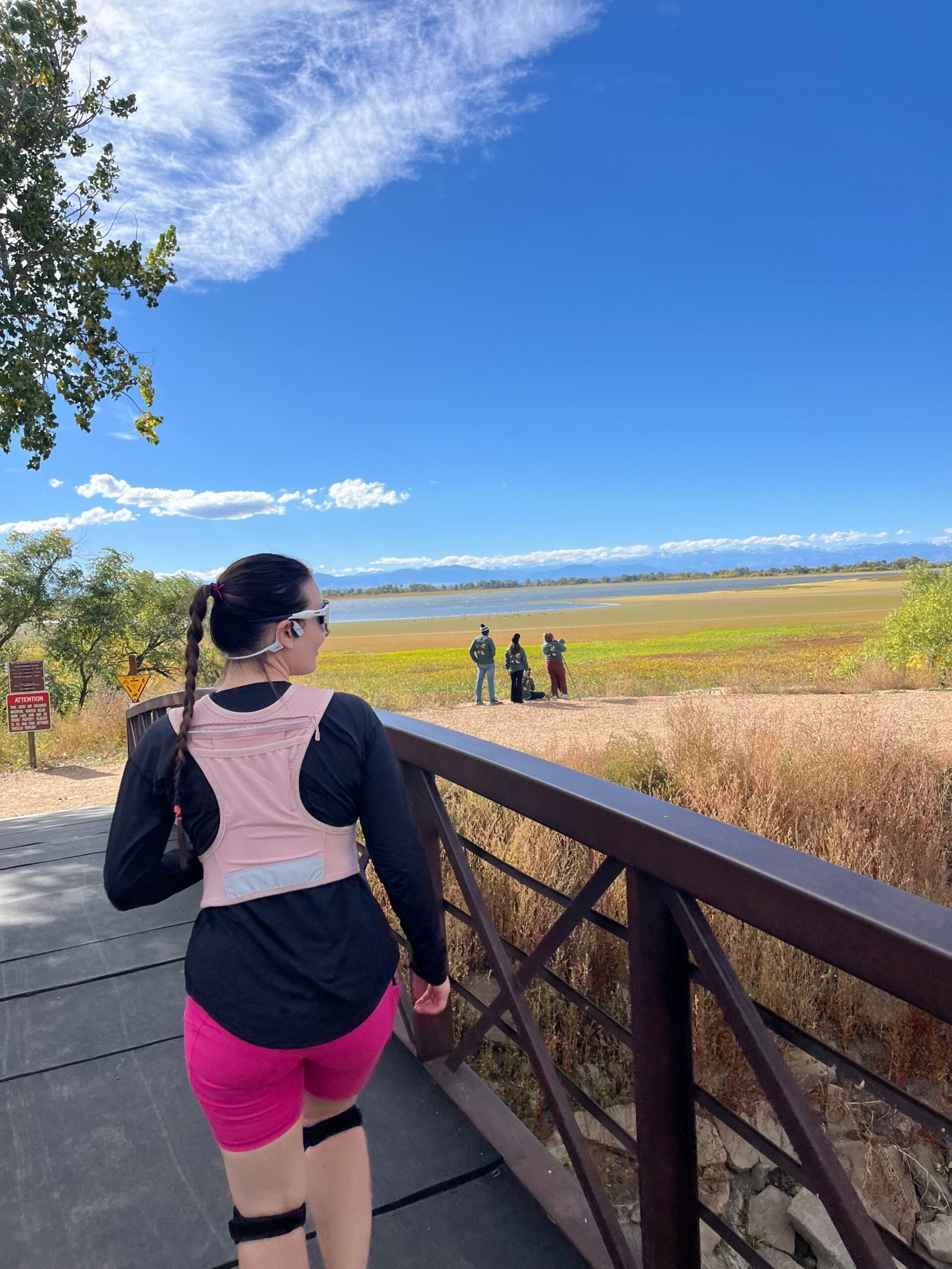

These are the running recovery tools I actually used to manage runner’s knee and keep training through it. From foam rollers to compression sleeves to massage guns, this list of running recovery tools covers everything worth having in your kit. If you’re dealing with a running injury and looking for running recovery tools that are genuinely worth buying, this is my honest list.
Everything I used to manage runner’s knee — and keep moving through it.
If you’ve dealt with a running injury, you know the drill. Rest, ice, frustration, Google everything at 11pm, add seventeen things to your cart, and hope something works. I’ve been there. When I was deep in runner’s knee last year, I tried a lot of things. Some helped. Some didn’t. This post is about the ones that actually made a difference.
Most of these tools came into my life during my worst stretch of PFPS — patellofemoral pain syndrome, or what most runners just call runner’s knee. But the truth is, nearly everything on this list is useful for a wide range of running injuries: IT band syndrome, shin splints, general overuse soreness, you name it. If something is bothering you and you’re trying to keep moving through it, this is my honest toolkit.
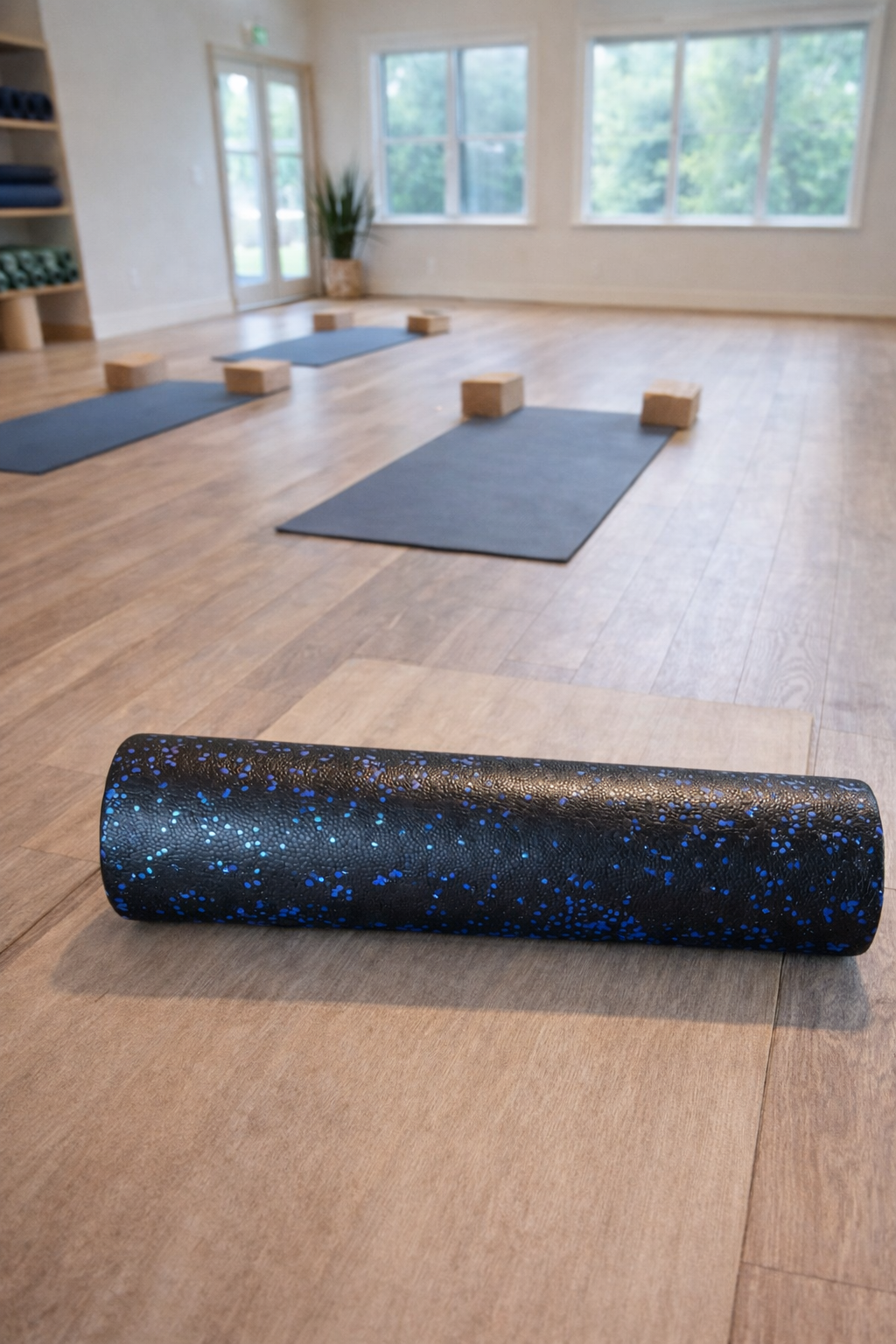
Foam Roller
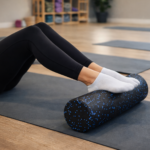
I will never stop talking about the foam roller. It was the single most impactful thing I added to my routine when my knees started giving me trouble — and I love this one so much that I actually keep one at home and one at work so I have zero excuses not to use it.
I foam roll my quads, IT band, and calves almost every day. The key is consistency. Five minutes before a run and five minutes after is enough to make a real difference over time. I can feel the difference on the days I skip it. If you don’t have one yet, this is the first thing I’d buy.
Shop Amazon Basics Foam Roller → * Affiliate link — I earn a small commission at no extra cost to you.BLITZU Knee Compression Sleeves
Compression sleeves became a regular part of my running kit during my worst stretches of knee pain. I wear these when I’m injured, after hard runs, or any time my knees feel off before I’ve even started. They provide support without restricting movement, and there’s something genuinely reassuring about that extra stability when things feel unstable.
I’d also throw them on around the house in the evenings after a long day on my feet. They’re lightweight, they don’t feel bulky under leggings, and they’re a solid and affordable option worth having on hand.
Shop BLITZU Compression Sleeves → * Affiliate link — I earn a small commission at no extra cost to you.Knee Braces — Because One Size Does Not Fit All Pain Levels
There’s a difference between running with a little knee discomfort and trying to function in daily life when your knee is actively screaming at you. I found that having two different braces for two different situations was a total game changer. They each solve a different problem.
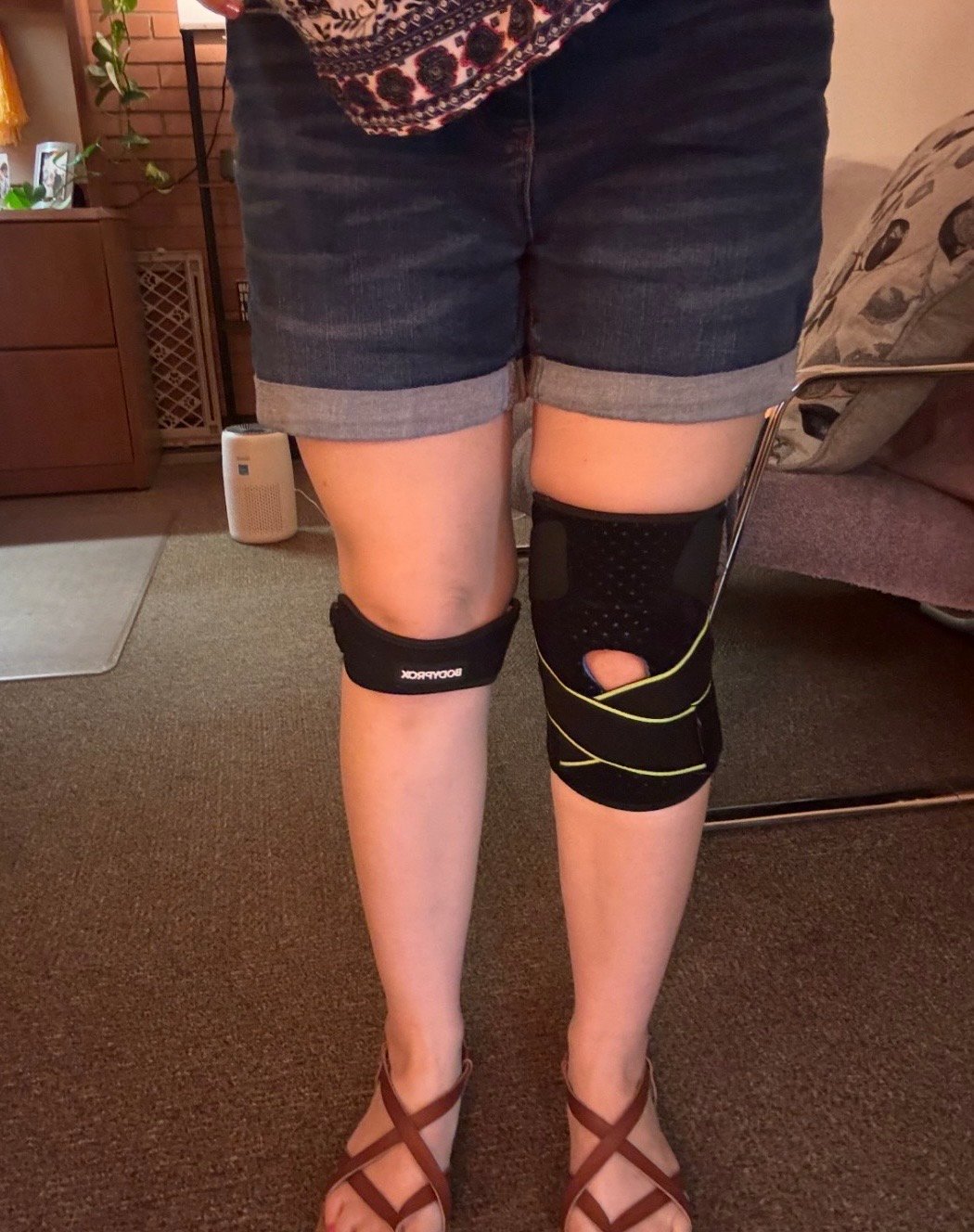
Bodyprox Patella Tendon Strap
This is my go-to when my knee is sore but I still need to move — whether that’s a shorter run, a walk with the dog, or just being on my feet. The patella strap applies gentle pressure just below the kneecap, which helps reduce that nagging ache during activity without feeling like you’re wearing a brace. It’s small, fits under most pants without a bulge, and honestly I forgot I had it on half the time.
Shop Bodyprox Patella Strap → * Affiliate link — I earn a small commission at no extra cost to you.Full Knee Brace with Stabilizers
This one is a different beast entirely. I wore this when I genuinely had no business being on my feet as much as I was. A full day at the state fair walking thousands of steps. Multiple days at work where projects had me on my feet all day. It wraps the entire knee and provides real structural support with stabilizers on both sides. I would not have survived those days without it.
This isn’t a running brace — it’s for the days when daily life is the challenge. Worth every penny when you’re in a bad flare and the world keeps moving anyway.
Shop Full Knee Brace with Stabilizers → * Affiliate link — I earn a small commission at no extra cost to you.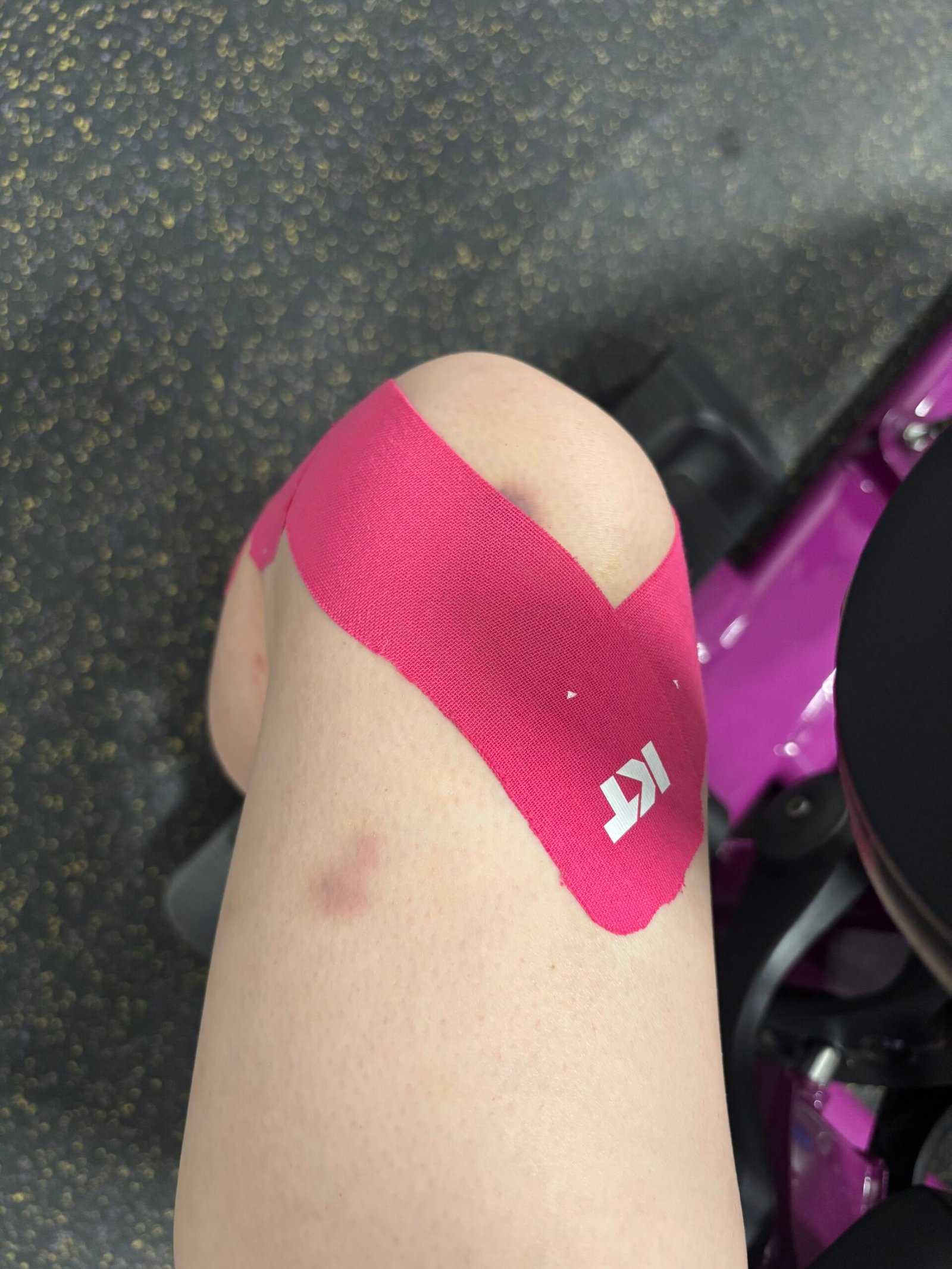
KT Tape Original
I’ll be honest — I was skeptical about KT tape at first. It looked like a placebo to me. But after using it consistently during my worst months of runner’s knee, I became a believer. It’s not magic, but when applied correctly it genuinely helps offload some of the stress on the knee and reduces that nagging ache during activity.
There are tons of YouTube tutorials for specific taping patterns depending on your injury — that’s exactly how I learned. The learning curve is real but once you get it, you’ll reach for it often. One roll lasts a surprisingly long time too.
Shop KT Tape Original → * Affiliate link — I earn a small commission at no extra cost to you.IASTM Scraping Tool
When my physical therapist first used a scraping tool on me, I had no idea what IASTM even was. It stands for instrument-assisted soft tissue mobilization, and the basic idea is that the stainless steel tool is used to break up adhesions and scar tissue in the fascia — the connective tissue around your muscles — which can build up after injury or repetitive stress and restrict movement and blood flow.
My PT used it on my IT band and quads and I felt a noticeable difference almost immediately in how my tissues moved. I went home and ordered one that same week. I use it on my calves and shins at home, and I look up YouTube tutorials any time I want to try it on a new area. Fair warning: it’s uncomfortable the first few times, especially on tight spots. But that discomfort is a sign it’s working, and it fades as the tissue releases.
I’d strongly suggest having a PT show you the technique before going rogue at home, but once you’ve seen it done, it’s easy to maintain on your own.
Shop IASTM Scraping Tool → * Affiliate link — I earn a small commission at no extra cost to you.Limm Resistance Bands
Here’s what my PT told me that I didn’t want to hear: a lot of runner’s knee comes down to weak glutes and hips. When those muscles aren’t doing their job, your knees take on more stress than they should. The foam roller and the braces manage the symptoms — but the resistance bands are where you start actually fixing the problem.
I do clamshells, lateral band walks, and glute bridges several times a week as part of my PT routine. I keep a set at home and a set at my office so I can squeeze them in on lunch breaks too. They’re cheap, they take up no space, and consistently doing the work with them genuinely changed how my knees feel on runs over time. Don’t skip the boring stuff. This is the boring stuff that works.
Shop Limm Resistance Bands → * Affiliate link — I earn a small commission at no extra cost to you.Running Recovery Tools: Massage Guns — Budget Pick vs. My Personal Favorite
A massage gun is one of those things that feels like a luxury until you actually have one, and then you wonder how you ever recovered without it. I use mine on my quads and calves almost every evening after a hard training day. It’s faster and more targeted than foam rolling and great for getting into specific tight spots that a roller just can’t quite reach.
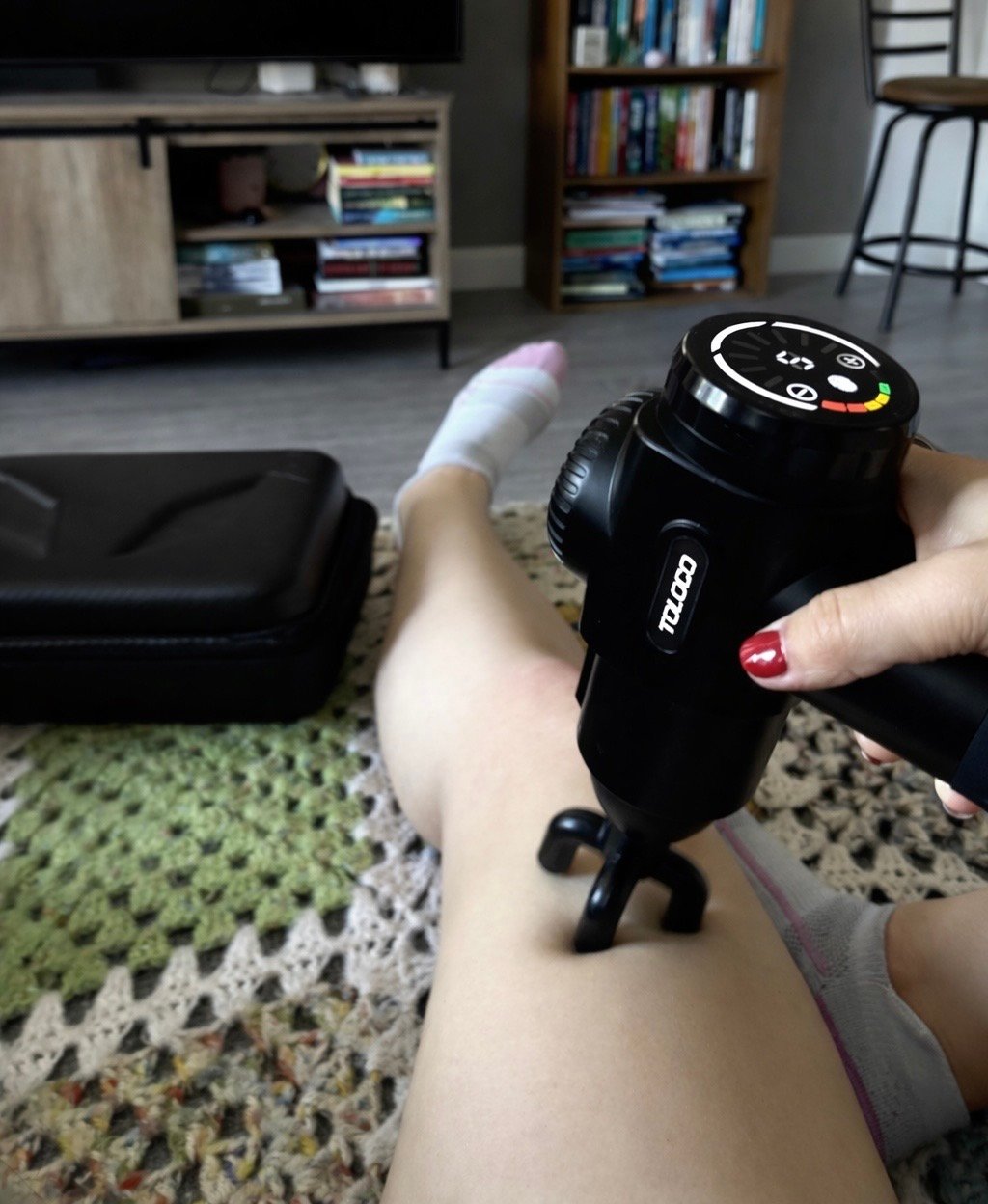
TOLOCO Massage Gun
We’ve had this one for years and it is still going strong. It comes with multiple attachment heads for different muscle groups — the round head for large muscles, the bullet for targeted spots, the flat head for general use. For the price, it’s genuinely impressive. This is the one I’d recommend if you’ve never owned a massage gun and want to try one without committing to a higher price point.
Shop TOLOCO Massage Gun → * Affiliate link — I earn a small commission at no extra cost to you.Hypervolt Go 2
This is my personal favorite and the one I reach for most often. It’s small enough to fit in a gym bag, quieter than most guns at this power level, and genuinely strong. If you want something you’ll actually use consistently — not something that ends up in a drawer — this is the one I’d invest in. The portability alone makes a huge difference. I bring this everywhere.
Shop Hypervolt Go 2 → * Affiliate link — I earn a small commission at no extra cost to you.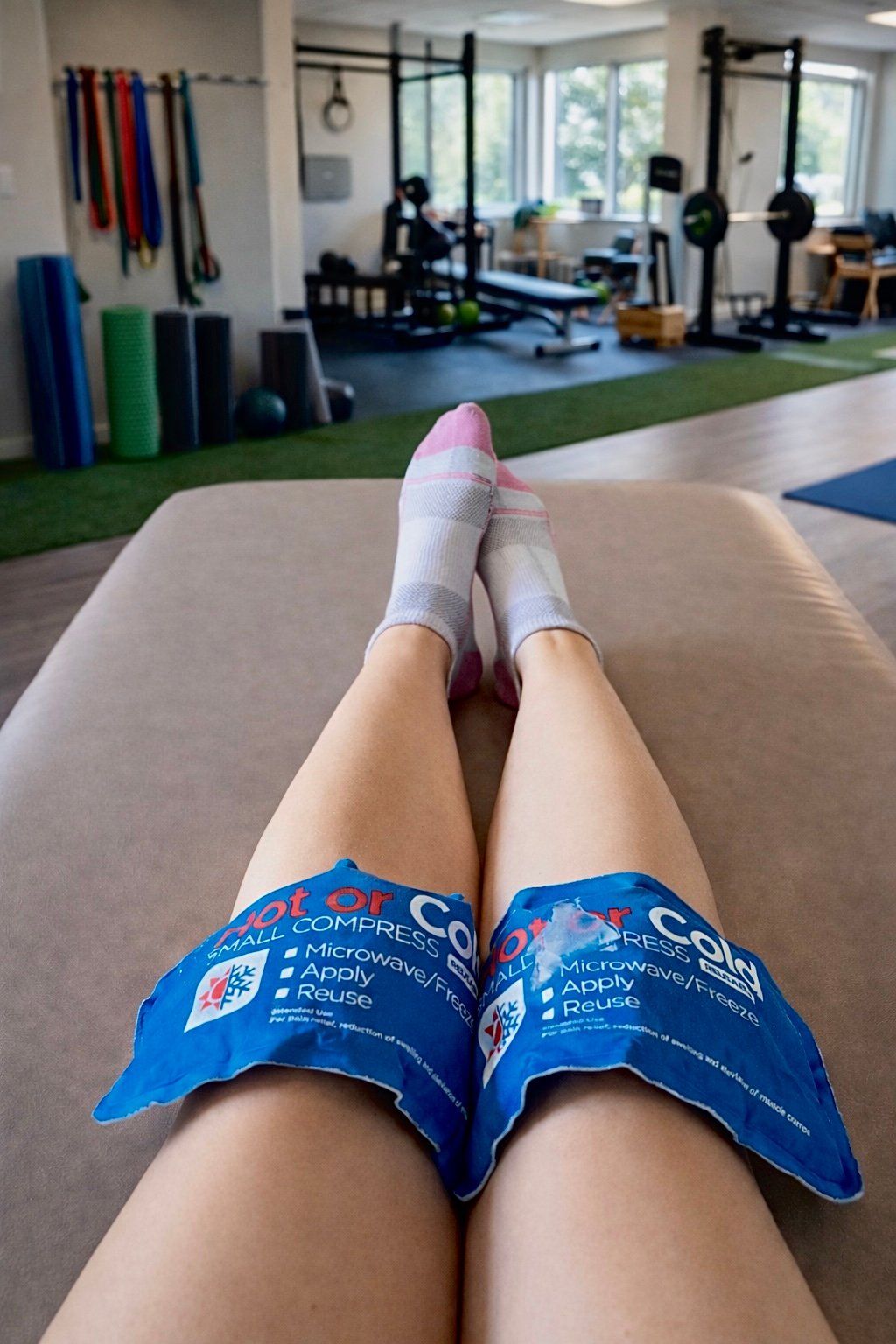
REVIX Knee Ice Pack
Ice and heat exist for a reason. During my worst flare-ups I used an ice pack before and after runs. Not sometimes. Every time. Ice helps reduce acute inflammation and pain right after activity. Heat is better before activity or on rest days to help loosen things up. Both have their place depending on where you are in a flare.
This one is specifically shaped to wrap around the knee, which makes a big difference versus a flat ice pack that slides around. It stays put, covers the right area, and works for both ice and heat. I kept mine in the freezer during heavy training weeks and genuinely used it constantly. Don’t underestimate the basics.
Shop REVIX Knee Ice Pack → * Affiliate link — I earn a small commission at no extra cost to you.You Don’t Have to Buy Everything at Once
If I had to pick a starting point: foam roller first, then compression sleeves, then work through the list as your needs evolve. The goal isn’t to have every tool — it’s to find what works for your body and your injury.
I hope something on this list helps you keep moving. Dealing with a running injury is genuinely frustrating. But you’ll get through it. 💪
Drop a comment below — what recovery tools have helped you most? I’d love to hear what’s in your toolkit! 🙌
If you found this helpful, you might also like:
- Running after injury feels different — and that’s okay
- Why every runner needs a foam roller — a deeper dive into my favorite tool
- The best running socks to prevent blisters — because small gear choices matter too