
What I run in, why I rotate, and the honest truth about whether you actually need four pairs of shoes.
Building a running shoe rotation changed the way I train. I used to think one pair of running shoes was enough. For a long time, that was true. I’d run a pair into the ground somewhere around 300 to 400 miles and then replace it with something new. It was simple, it worked, and I didn’t think twice about it.
But the deeper I got into half marathon training, the more I started to notice that different runs felt like they needed different shoes. Easy recovery miles felt better in something plush and forgiving. Speed work felt sharper in something lighter and more responsive. Long runs needed maximum cushion under my feet. Once I started paying attention to that, I couldn’t un-notice in. And once I started rotating, I never went back.
Today I’m walking you through the four shoes in my current rotation, what I use each one for, and why I reach for each one on specific days. But first — and I mean this — let me tell you the most important thing before we get into any of it.
Do You Actually Need a Shoe Rotation?
Honestly? No, at least not when you’re just starting out. When I first started running, I had one pair of shoes and that was completely fine. A single well-fitting pair is all you need to build your base, get consistent, and figure out what kind of runner you are.
But as your mileage builds and your training gets more intentional, a rotation starts to make sense for two reasons. First, every running shoe has a mileage lifespan, usually somewhere between 300 and 500 miles depending on the shoe and how you run. When the cushioning breaks down, your body starts absorbing more impact than it should, and that’s when injuries creep in. Rotating between multiple pairs extends the life of each one because the foam gets time to decompress between runs. Second, different shoes are built for different purposes. A max cushion shoe that’s incredible for a slow 12-miler might feel clunky during a speed workout. Having the right shoe for the right run makes a real difference in how you feel both during and after.
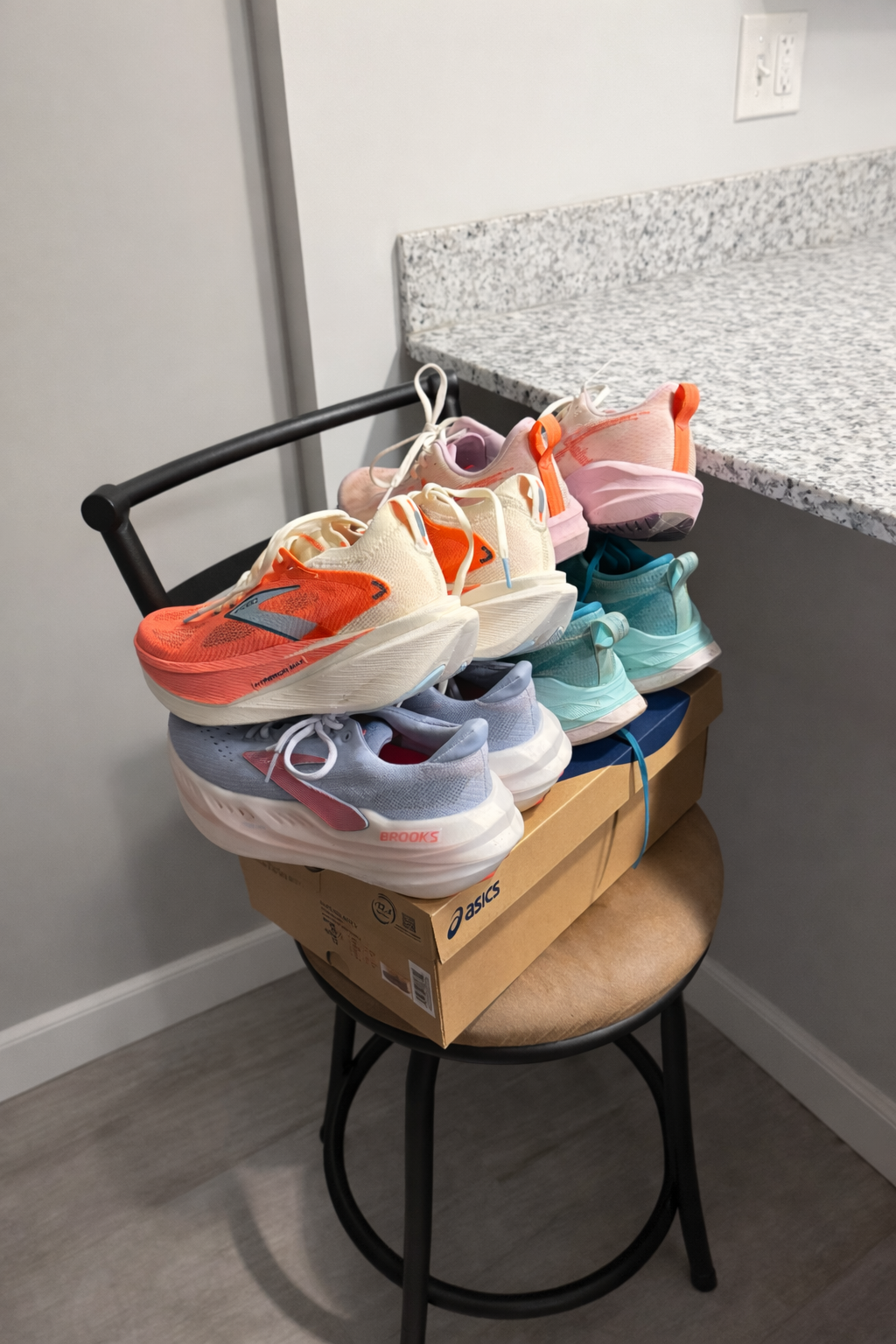
My Current Rotation — Quick Reference
| Shoe | Best For | Feel |
|---|---|---|
| ASICS Novablast 5 | Easy runs, everyday miles, race day | Plush, bouncy, versatile |
| Brooks Glycerin Max | Easy long runs, recovery miles | Maximum cushion, protective |
| ASICS Superblast 2 | Long runs at pace, progression runs | Lightweight, fast, high stack |
| Brooks Hyperion Max 3 | Speed work, intervals, race day | Firm, responsive, plated |
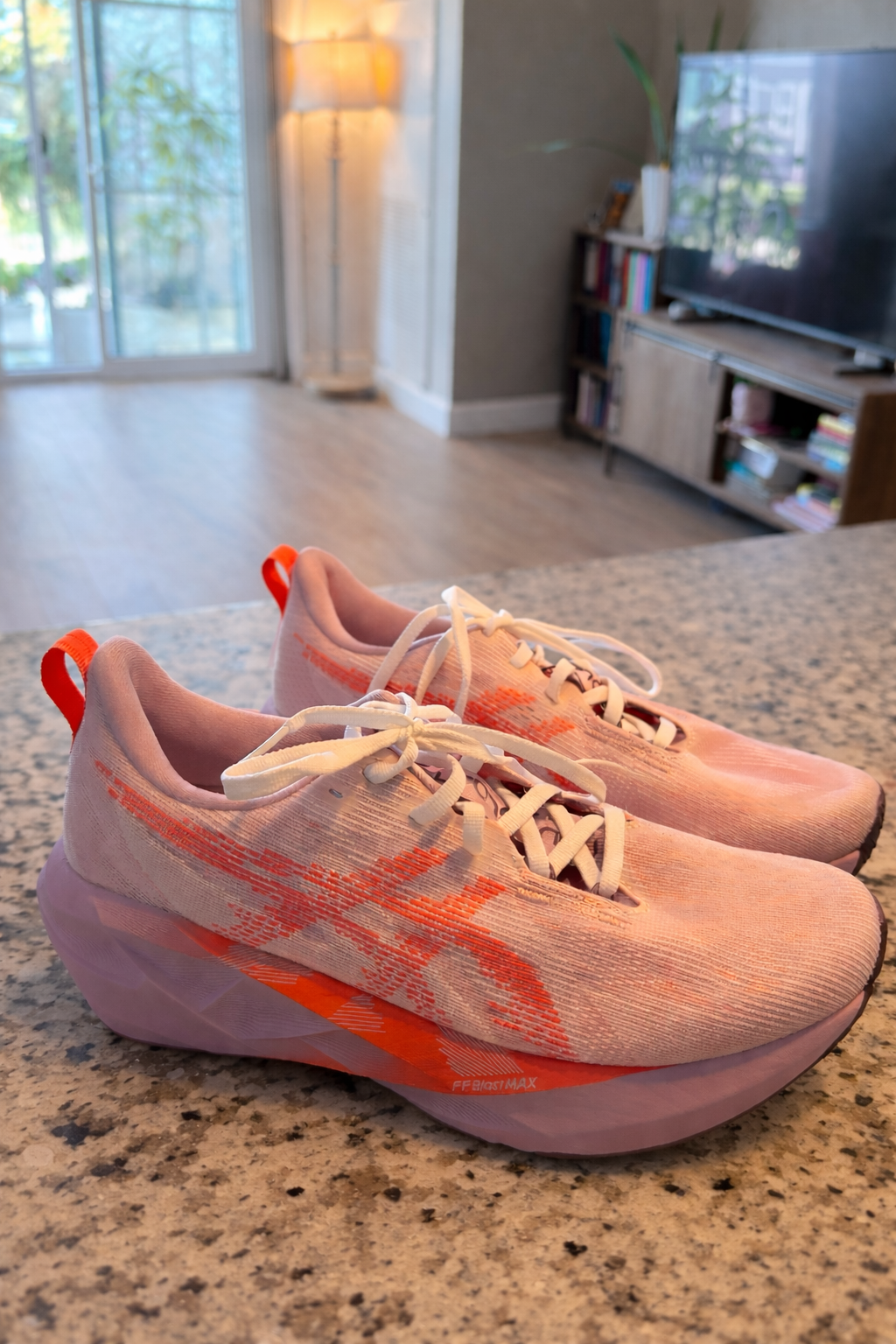
ASICS Novablast 5
If I could only keep one shoe in my rotation, it would be this one. The ASICS Novablast 5 is a versatile daily trainer with a plush FF Blast Max foam midsole. It’s soft and cushioned without feeling sluggish, and it has just enough energy return to feel fun at a variety of paces.
I use the Novablast for most of my easy runs and everyday training miles. It’s the shoe I reach for on Tuesday and Thursday mornings without even thinking about it. But it’s also the shoe I wore for my half marathon, which tells you everything you need to know about how versatile it is. It’s comfortable enough for long miles but responsive enough that it doesn’t feel like a slog at a moderate pace.
It runs true to size, has a roomy toe box, and has held up beautifully in both warm and cold weather. Honestly, it’s just a really fun shoe to run in — and that matters more than people give it credit for.
Shop ASICS Novablast 5 on Amazon → * Affiliate link — I earn a small commission at no extra cost to you.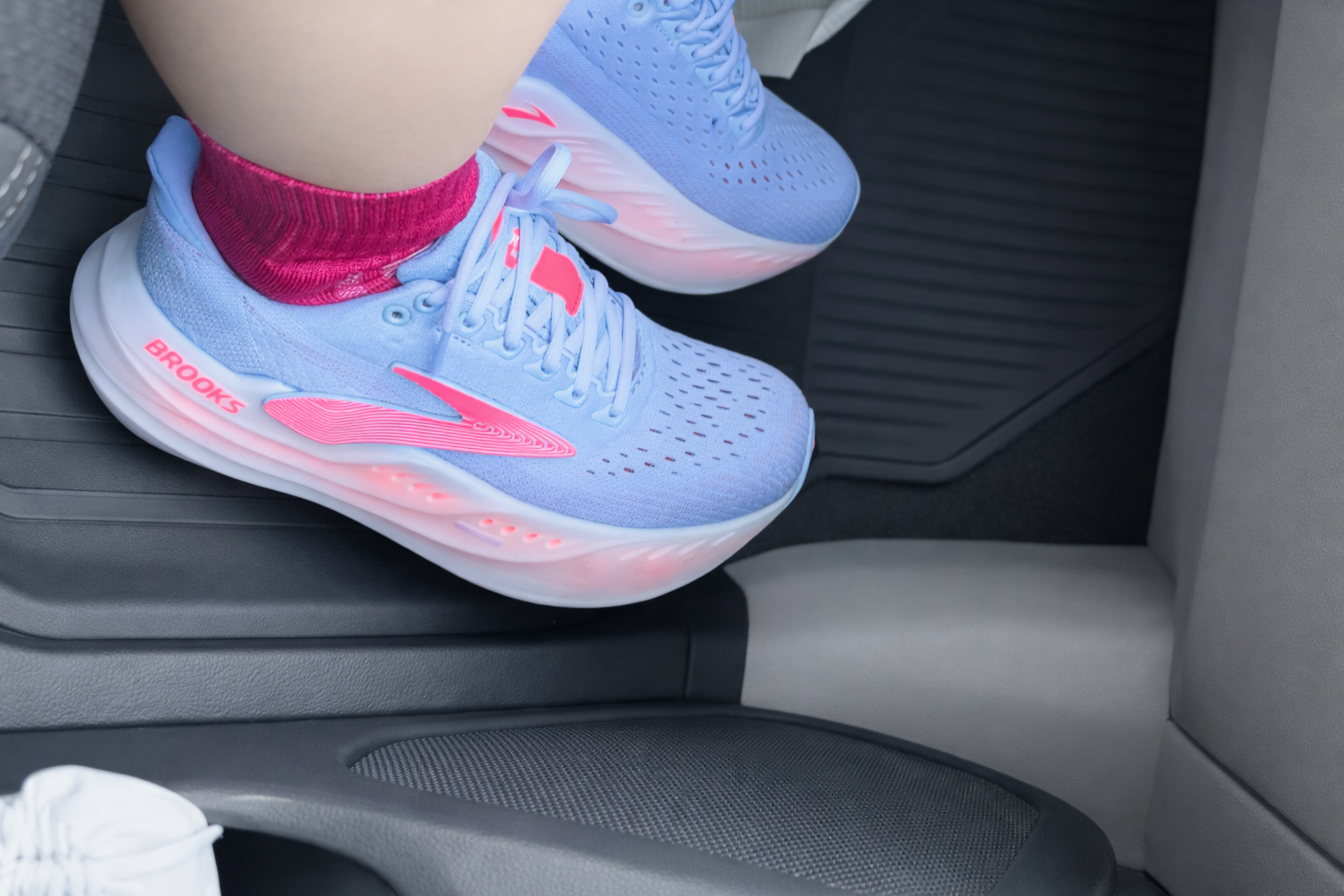
Brooks Glycerin Max
If the Novablast is my everyday shoe, the Glycerin Max is my long run shoe, perfect for those easy, slow, just-get-the-miles-in long runs where I want maximum protection under my feet.
Brooks built the Glycerin Max with their DNA Tuned foam, which is one of the most cushioned midsoles they’ve ever made. It’s not a fast shoe at all, but that’s not the point. The point is that after 10 or 12 miles, your feet and legs are still feeling protected and comfortable, which sets you up for a better recovery before your next run.
I think of this shoe as doing the hard work for me on easy days. It absorbs the impact so my body doesn’t have to, and I genuinely notice the difference the next morning compared to running a long easy effort in a lighter shoe.
Shop Brooks Glycerin Max on Amazon → * Affiliate link — I earn a small commission at no extra cost to you.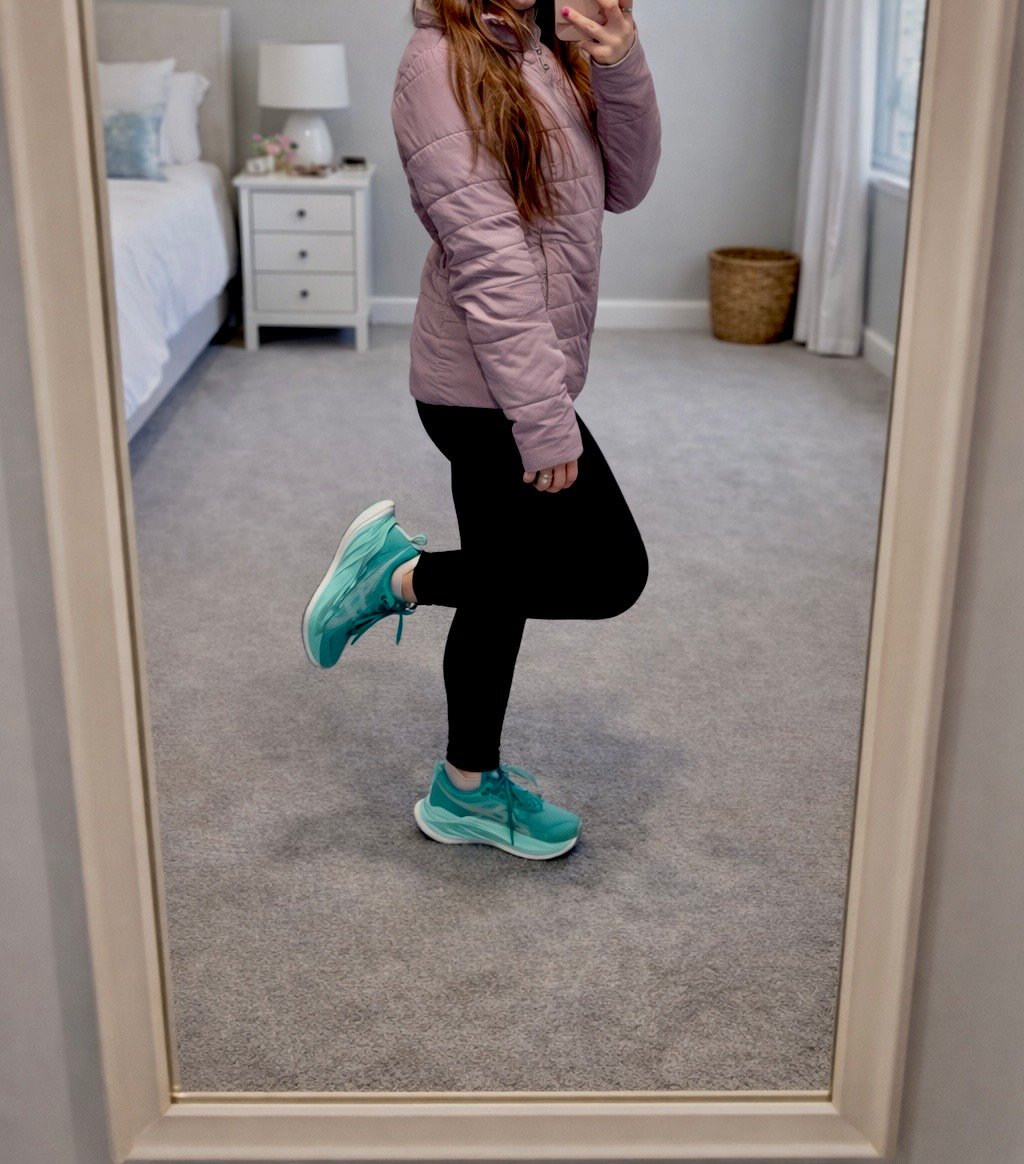
ASICS Superblast 2
The Superblast 2 fills a specific gap in my rotation. It’s my long run shoe for the days when I want to pick up the pace. Where the Glycerin Max is all about easy miles and protection, the Superblast is built for distance with speed.
It has a surprisingly tall stack of cushioning for how lightweight it is, and ASICS used their top-tier foam here. ASICS used their top-tier foam here, the same stuff found in their race day shoes. In practice, it has the cushion to carry you through long miles and the energy return to actually feel fast when you push. It’s the shoe I reach for on progression long runs or when I’m doing a long run with a faster finish.
A lot of runners also use the Superblast as a race day shoe, and I can see why. It’s versatile in a way that most max cushion shoes just aren’t. You can genuinely move in it.
Shop ASICS Superblast 2 on Amazon → * Affiliate link — I earn a small commission at no extra cost to you.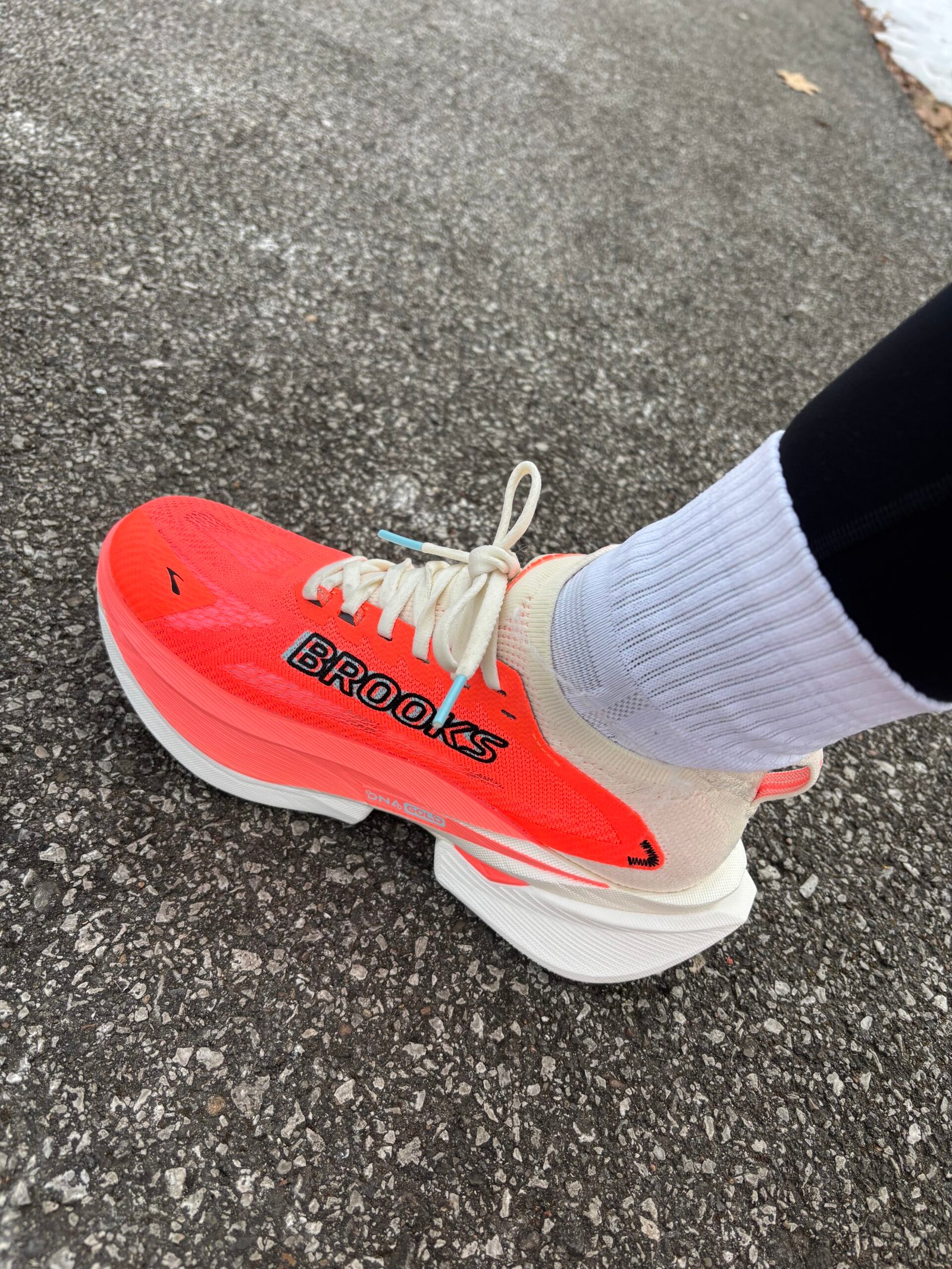
Brooks Hyperion Max 3
The Hyperion Max 3 is my speed shoe, and that’s exactly what it does. This is not a comfort shoe and it’s not a casual daily trainer. It’s built to go fast, and it feels completely different from everything else in my rotation because of that.
It has a SpeedVault plate inside the midsole along with Brooks’ DNA Gold foam, which gives it a firm, responsive, propulsive feel. When I strap these on for interval work or a speed session, I know immediately that I’m in a performance shoe. The plate creates a snappy toe-off that pushes you forward in a way that softer, plateless shoes just don’t.
I also reach for these on race day. Just know going in, this shoe is not for everyone. If you’re newer to running or you don’t do structured speed work yet, this isn’t the place to start. But if you’re training consistently and looking for a shoe that can match your fastest efforts, this one delivers.
Shop Brooks Hyperion Max 3 on Amazon → * Affiliate link — I earn a small commission at no extra cost to you.Track Your Mileage — It Matters More Than You Think
I want to come back to something I mentioned earlier because I think it gets overlooked way too often. Every running shoe has a mileage lifespan. Most shoes are built to last between 300 and 500 miles, though that range varies depending on the shoe, how heavy you are, how you land, and what surfaces you run on.
When the cushioning in a shoe breaks down, it stops doing its job. You might not notice it happening because the shoe still looks fine on the outside, but internally the foam has compressed and isn’t absorbing impact the way it was designed to. That’s when you start feeling more fatigue in your legs, more soreness in your joints, and eventually…injuries.
I track my mileage per shoe in my Garmin because it syncs automatically, but you can just as easily keep a note in your phone. When a pair approaches 400 miles I start thinking about replacing it. I’ve made the mistake of pushing shoes past their limit before, and my knees noticed immediately. Don’t learn that lesson the hard way.
You Don’t Need Four Pairs to Get Started
I want to end where I started, with a reminder that a shoe rotation is something you build into over time, not something you need on day one. I started with one pair of shoes, ran in them until they were done, and replaced them. That is completely fine and it works.
But if you’re in a serious training block and noticing that your runs feel different depending on what’s on your feet. That’s probably your body telling you it might be time to think about this. And visiting a running store to get properly fitted before buying anything is always the best first step, no matter where you are in your running journey.
Drop a comment below — are you a one-shoe runner or do you rotate? I’d love to hear what’s in your rotation! 👟
If you found this helpful, you might also like:
- The best running socks to prevent blisters — because great shoes deserve great socks
- How to transition from treadmill to outdoor running — and why shoe choice matters even more outside
- Running after injury — and how the right gear helped me get back on track