
Runner’s knee (PFPS) is one of the most common and frustrating running injuries — and it derailed my entire summer. In this guide I’m sharing everything I learned about runner’s knee firsthand: what it actually is, how long recovery really takes, and what finally helped me get back to running and cross that half marathon finish line.
I spent an entire summer unable to walk to get ice cream. Here’s everything I learned about runner’s knee — the honest version, not the “just rest for a few days” version.
Runner’s knee came for me in the first week of June, right when I was at the peak of my fitness. One painful Thursday run, one slow and agonizing Sunday long run, and suddenly I was spending my entire summer on the couch Googling the same questions over and over — how long does this last, should I stop running, what actually helps. I never found one place that answered all of it. So I’m building that resource myself, because if you’re reading this at 11pm with ice on your knee, you deserve real answers.
What is runner’s knee (PFPS)?
Runner’s knee is the common name for patellofemoral pain syndrome (PFPS) — which is a fancy way of saying pain around or behind your kneecap. The kneecap (patella) sits in a groove and glides up and down as you bend and straighten your leg. When something throws off that tracking — tight muscles, weak hips, overuse — it creates friction and irritation that causes that aching, sometimes sharp pain at the front of your knee.
Here’s something important that took me a while to understand: runner’s knee is usually not actually a knee problem. The knee is just where you feel the pain. The real culprits are often tight quads pulling on the kneecap, weak glutes and hip muscles failing to stabilize the leg properly, or a combination of both. This is why just resting doesn’t fix it and why targeted strengthening is what actually moves the needle.
What does it feel like?
How long does runner’s knee last?
I’m going to be honest with you because I know you want a real answer: it depends, and it’s probably going to take longer than you think. I know that’s not what you want to hear. But going in with realistic expectations is so much better than assuming you’ll be fine in two weeks, because I made that mistake, and it made the whole experience so much harder.
🟡 Mild cases
- 2–6 weeks with rest and consistent PT exercises
- May be able to continue modified running
- Responds well to early treatment
🔴 Moderate to severe cases
- 2–6+ months of active management
- May need to stop running temporarily
- Requires consistent, runner-focused rehab
- Flare-ups can happen even after recovery
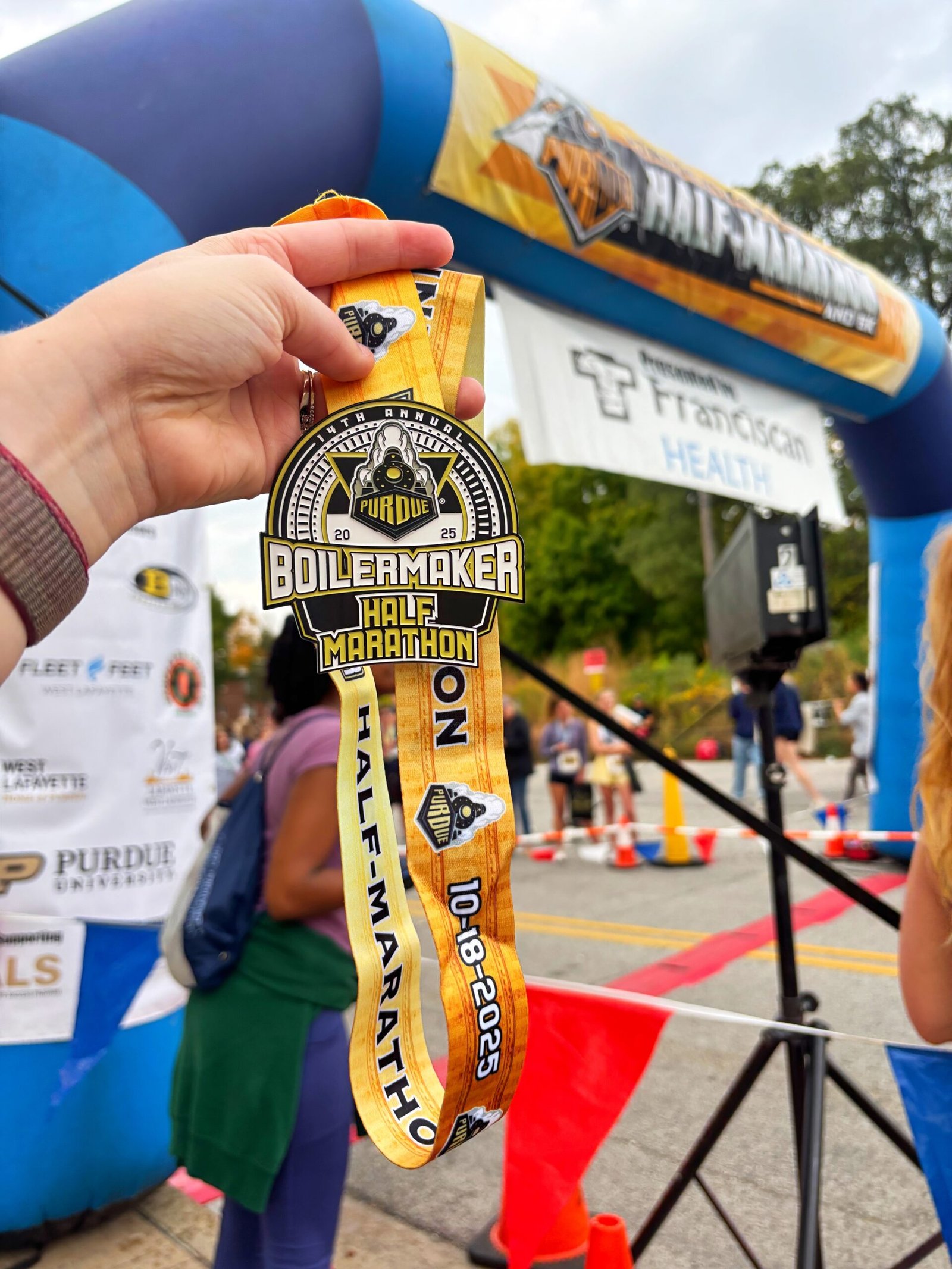
My injury started in early June. I ran my half marathon in mid-October. That’s about four and a half months and I still manage occasional flare-ups today. I’m not saying this to scare you. I’m saying it because the runners who recover fastest are the ones who take it seriously from the beginning instead of pushing through and making it worse.
Should you stop running?
This is the question I Googled approximately 400 times. Here’s my honest take after living through it:
That said, “stop running forever” is rarely the answer. Here’s a more useful way to think about it:
What actually helps (the real fixes)
These are the things that address the root cause of runner’s knee. They are not quick fixes. They require consistency, but they are what actually get you better.
💪 Targeted strength training
This is the single most important thing you can do. Weak glutes and hip muscles are the most common underlying cause of PFPS. When those muscles aren’t doing their job, your kneecap takes the brunt of every single step. The key thing I’ve had to remind myself is that the knee is just a joint. It’s the muscles around it that need the work. Building strength in your glutes and hips is what actually changes how the kneecap tracks and reduces that pain over time.
The exercises that have made the biggest difference for me are glute-focused: clamshells, fire hydrants, donkey kicks, and hip bridges. Quad strengthening — especially terminal knee extensions — also helps retrain how your kneecap tracks. What I do now during active flare-ups is a short resistance band routine before and after every run, and at least once on non-run days. It has made a noticeable difference in how stable my knee feels.
My banded routine for runner’s knee
These three moves target the glutes and hip abductors, the muscles most responsible for keeping your kneecap tracking properly. I keep a set of bands at home and at work so I can get these in throughout the day, not just around runs.
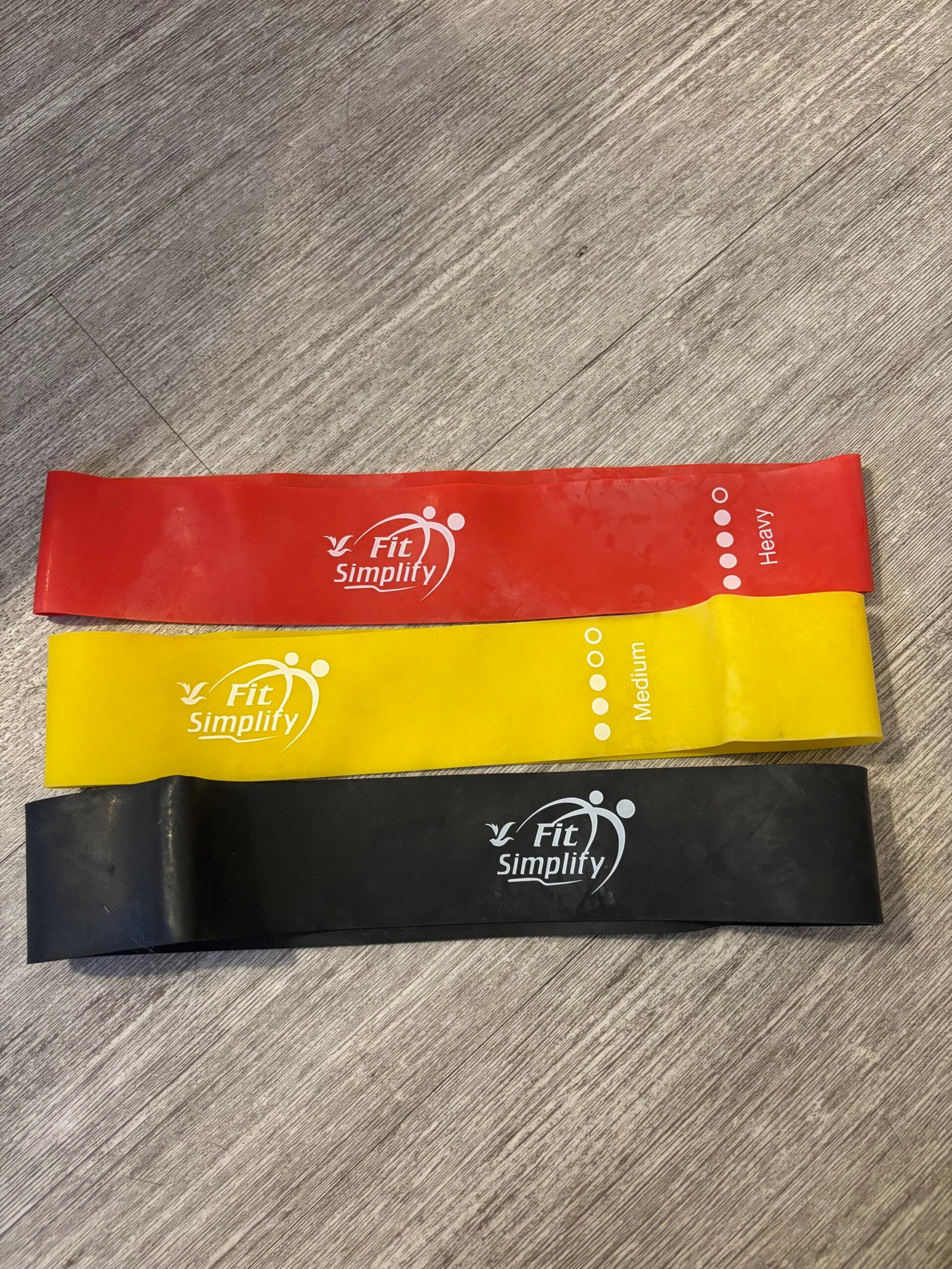
The Resistance Bands I Use
I keep a set at home and a set at work so there’s no excuse not to get these in. Five resistance levels so you can progress as you get stronger — start lighter than you think you need to and focus on form first.
Shop on Amazon → Affiliate link — I earn a small commission at no extra cost to you. I only share products I personally use and trust. 🤍🫀 Foam rolling
Tight quads, IT band, and hamstrings all pull on the kneecap and contribute to poor tracking. Consistent foam rolling helps release that tension so the knee can move more freely. I foam roll before and after every run now and it has become completely non-negotiable. Focus especially on the quads, IT band, glutes, and hamstrings.
The Foam Roller I Actually Use
Firm enough to actually release tight muscles — including the quads that were pulling on my kneecap — but not so aggressive it’s unbearable. This is part of my daily routine and I notice a real difference on days I skip it.
Shop on Amazon → Affiliate link — I earn a small commission at no extra cost to you. I only share products I personally use and trust. 🤍✂️ Scraping (IASTM)
Instrument-assisted soft tissue mobilization — scraping — is something my PT used on my quads and IT band during treatment. It helps break up scar tissue and fascia restrictions that foam rolling alone can’t fully reach. If you’re doing in-clinic PT, ask if they offer this. It’s uncomfortable but genuinely effective.
🩺 Finding a runner-focused PT
This was the real turning point. I did in-clinic PT for over a month and saw minimal improvement. This is not because PT doesn’t work, but because the exercises I was given were general knee rehab, not runner-specific rehab. The difference when I found programming designed specifically for runners with PFPS was significant and immediate.
Dr. Lisa’s Runner’s Knee Program
This is not an affiliate recommendation. I’m sharing this because I genuinely credit Dr. Lisa’s program with getting me to the start line of my half marathon. I found her on Instagram, purchased her runner-focused PFPS program, and did it 6 days a week for two months. It was the first thing that gave me real, consistent relief and let me start running again. If you’re stuck, this is worth looking into.
Visit Dr. Lisa’s site →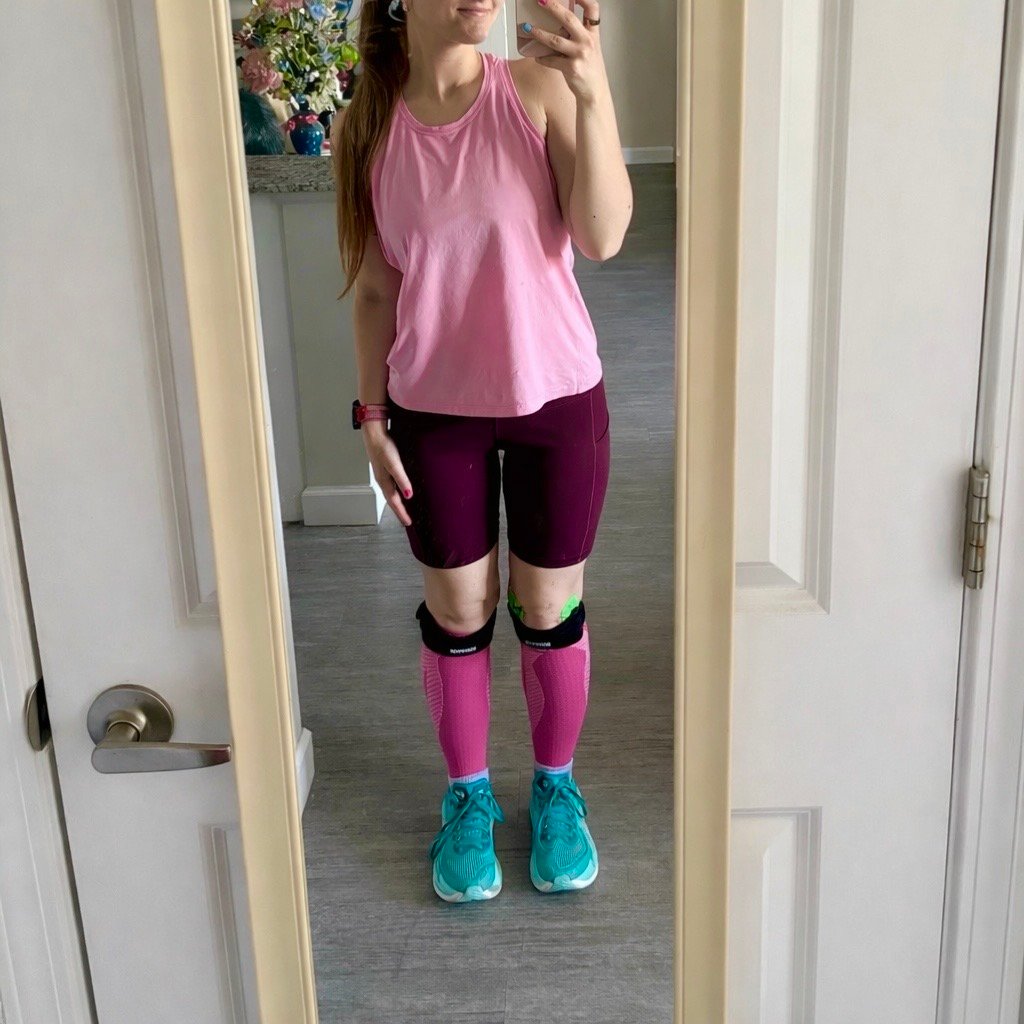
Supportive tools that help (but won’t cure)
These things won’t fix runner’s knee on their own, but they genuinely helped me manage day-to-day pain while doing the real work. Think of them as tools that make life livable while you heal. These are not replacements for strength work and rehab.
Patellar Tendon Strap
A lifesaver for daily walking during flare-ups. Applies gentle pressure below the kneecap to reduce pain with movement. I wore this to the farmers market all summer. It was the only way I could enjoy being outside.
Shop on Amazon → Affiliate link 🤍Compression Knee Sleeve
Different from a patellar strap — this wraps the whole knee for warmth and support during runs. I wore this through my entire training build and on race day for my half marathon.
Shop on Amazon → Affiliate link 🤍Running Shoe Insoles
Helped with shock absorption and alignment. Temporary relief rather than a cure, but worth trying if your shoes feel unsupportive or you’re on hard surfaces.
Shop on Amazon → Affiliate link 🤍Pain management during flare-ups
These help you feel better day-to-day but don’t address the underlying issue. Use them to manage symptoms while you do the actual work.
Arnica Gel
I went through probably 10 of these with 7 being the value size. Applied multiple times daily during my worst months. Great for natural inflammation relief.
Shop on Amazon → Affiliate link 🤍Hemp Oil Topical
Used this alongside arnica, especially at night. Helped with soreness and general tension around the knee. Went through two of these during recovery.
Shop on Amazon → Affiliate link 🤍⚡ A note on Voltaren
Voltaren is a topical anti-inflammatory gel. It’s similar in effect to ibuprofen, but applied directly to the skin over the painful area. It works by reducing inflammation, which is a big part of what makes runner’s knee hurt, and it is genuinely effective during bad flare-ups. That said, this is not something to rely on every day. Think of it like aspirin. Useful in the right moment, but not a substitute for figuring out why the inflammation keeps coming back. Save it for your worst flares.
Voltaren Topical Gel
Use this during flare-ups when inflammation is high and you need real relief. Not a daily tool, but when things are bad, this works. Apply a small amount directly to the knee area as directed on the packaging.
Shop on Amazon → Affiliate link — I earn a small commission at no extra cost to you. I only share products I personally use and trust. 🤍When to see a PT
How to return to running
Return slowly! More slowly than you think you need to. The rule I followed was simple: no pain during the run, and no pain the day after. If either happened, I pulled back. Here’s roughly what a return-to-run progression looks like:
Walk pain-free for 30+ minutes consistently before attempting to run
Walk/run intervals — start with 1 min running, 2 min walking
Gradually increase run intervals and decrease walk breaks
Continuous easy running at short distances only
Slowly build mileage — no more than 10% increase per week
Keep doing PT exercises alongside running — this part doesn’t stop
The fear doesn’t fully go away — and that’s okay
Almost 10 months later, when my knee starts to ache on a run, my stomach still drops a little. I flash back to that summer immediately. I think every runner who has been through a serious injury knows that feeling.
What I’ve learned is that the fear is actually useful. It reminds me not to skip my PT exercises, not to ramp mileage up too fast, not to ignore what my body is telling me. The goal isn’t to forget it happened. It’s to build enough strength and consistency that you trust your body again. Plus on hard days, I think back to when I couldn’t run and how much I wanted to, and get myself out there.
I still have flares. I still manage this actively. But I also just signed up for two half marathons and a full marathon this year. Runner’s knee doesn’t have to be the end of your story, it’s just a chapter.
You’re going to get through this. Do the PT, be patient with your body, and don’t give up on your goals. 🩷