
Making the switch from treadmill to outdoor running — and actually surviving it with your knees intact.
Switching from treadmill to outdoor running is one of the most exciting — and humbling — things you can do as a runner. I’m not a doctor, a trainer, or any kind of running expert. I’m just someone who has been running for a few years, made a lot of mistakes, and figured some things out the hard way. Runner’s knee included. This is just me sharing what I wish someone had told me when I first stepped off the treadmill and onto real pavement.
Why your treadmill miles don’t fully prepare you
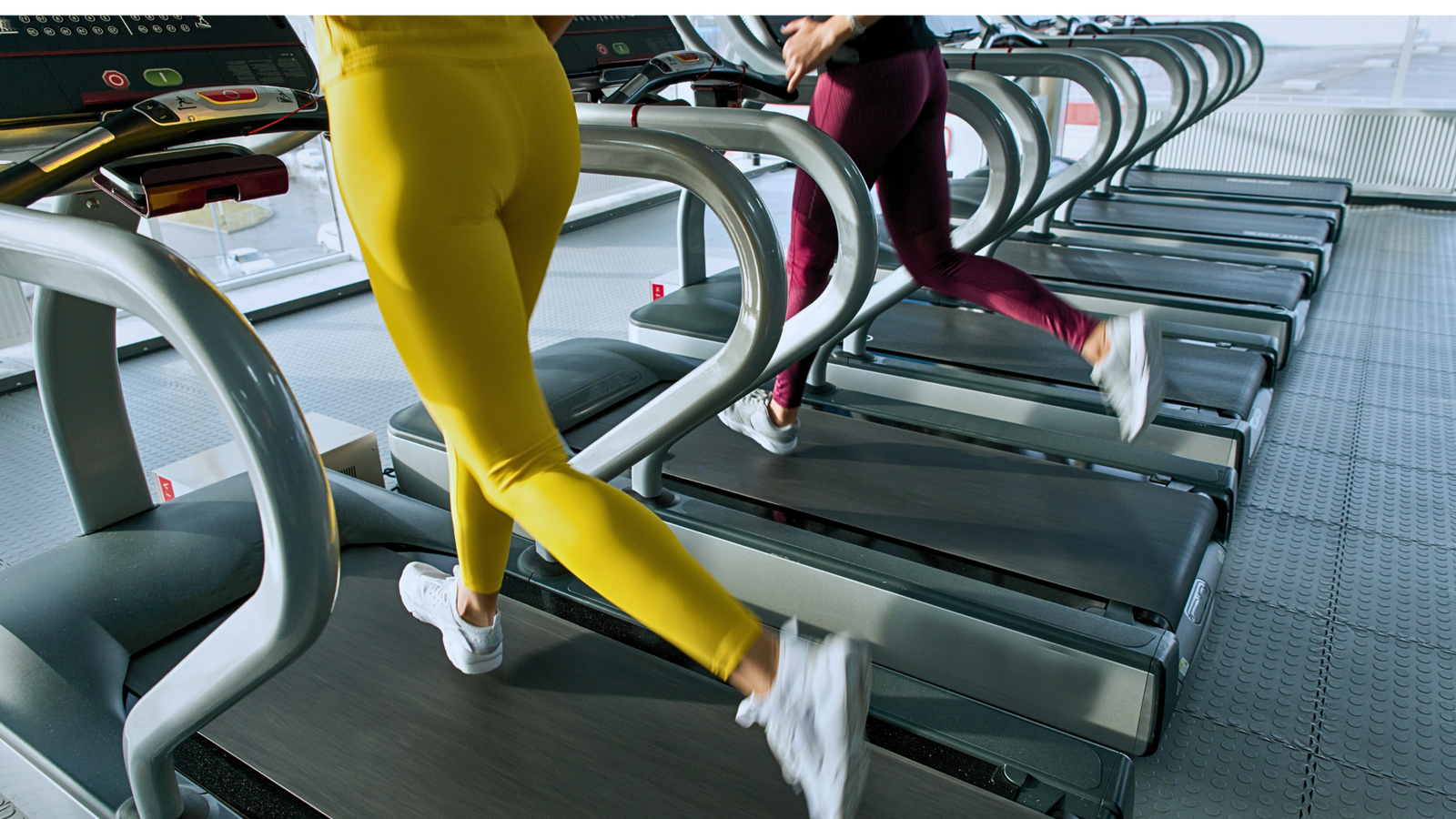
Here’s the thing nobody told me: running on a treadmill and running outside are actually pretty different. On a treadmill, the belt is moving under you — you’re kind of just lifting your feet. Outside, your legs have to actually push you forward, which uses your hamstrings and glutes a whole lot more.
And then there’s the ground itself. Concrete is way harder than a treadmill belt. Sidewalks have cracks and slight slopes. Paths have hills. Your body just hasn’t dealt with any of that, even if you’ve been running consistently for months. It’s also worth understanding how running changes your body over time — the adaptations that help you outdoors happen gradually, not overnight.
Before your first outdoor run
I ran in worn-out shoes for way too long because I didn’t want to spend the money. If the soles are worn down unevenly or the cushioning feels flat, outdoor running will make that so much worse. It doesn’t have to be expensive — just not falling apart. And while you’re at it, make sure you have the right running socks too — blisters hit harder on pavement than on a treadmill.
If you’re running 4 miles on the treadmill, start with 2.5–3 miles outside. This sounds unnecessarily cautious but I promise it’s not. You can always add more next week. You can’t un-injure a knee right away.
Wind resistance is a real thing and it makes outdoor running harder even at the same pace. I’d suggest going 30–60 seconds per mile slower than your usual treadmill pace and just running by feel at first. Your ego will survive it.
Hills are great…eventually. For your first few outdoor weeks, stick to flat ground. A park loop, a flat trail, your neighborhood. Save the hills for when your body has adjusted to the surface change first.
🦵 Let’s talk about the knee thing
Runner’s knee (the official name is patellofemoral pain, which sounds scary but basically just means knee cap irritation) is incredibly common in runners who make this transition too fast. I had it from increasing my load too fast, a lot of my running friends have had it, and it’s almost always preventable. I wrote a whole post about coming back from runner’s knee if you want the full story — but here’s what matters most for prevention.
Watch your stride. If your foot is landing way out in front of your body, that’s called overstriding and it sends a ton of impact straight to your knee. Try to land with your foot roughly under your hip, not in front of it. Taking slightly quicker, shorter steps naturally fixes this.
Your hips matter more than you’d think. Weak hips cause your knee to wobble inward when you land, which puts stress on the kneecap. Simple exercises like glute bridges and clamshells a couple times a week genuinely make a difference. I was skeptical and then I tried it and it helped. Adding foam rolling to your routine alongside these exercises makes a huge difference too.
Walk the downhills if you need to. Going downhill is actually really hard on your knees because your quads are braking your whole body weight. There is zero shame in walking down hills. I still do it sometimes on steep ones.
The 10% rule. Don’t increase your weekly mileage by more than 10% per week. When you’re transitioning from treadmill, I’d honestly go even more conservative — like 5–7% — for the first couple months. I wish I would have done this in the past.
A simple 6-week plan
This is roughly what worked for me. I was running about 3–4 days a week when I started transitioning.
Little things that helped me
Warm up before you go
Cold outdoor air + immediate running = unhappy legs. Even five minutes of leg swings and hip circles makes a real difference.
Bring water
No treadmill cup holder out here! For runs over 40 minutes especially, have a plan for hydration.
Watch where you’re going
Sidewalk cracks, roots, uneven curbs — I’ve almost rolled my ankle more times than I want to admit. Stay present.
Know your route
Getting lost adds surprise mileage you didn’t plan for. Plan loosely before you leave so you’re not accidentally running 6 miles when you meant to do 3.
Dress lighter than you think
The rule is dress like it’s 10–15 degrees warmer than it actually is outside. You heat up fast once you get moving.
Pain vs. soreness
Normal muscle soreness after outdoor runs? Expected. Sharp joint pain or anything that gets worse as you run? Stop and rest. Not everything needs to be pushed through.
“The treadmill got me started. The outdoors made me actually love it.”
What I wish I’d known before switching from treadmill to outdoor running
Honestly? That switching from treadmill to outdoor running was going to feel harder than expected at first, and that was completely normal. My first few outdoor runs I felt way more winded than I did on the treadmill at the same pace, and I thought something was wrong with me. Nothing was wrong. It’s just different.
Within a month, I actually started looking forward to runs in a way I never really did on the treadmill. The change of scenery, being outside, not staring at a screen — it made running feel less like a chore and more like something I actually wanted to do. And once you’re running consistently outside, you start to see all the other ways running is transforming your body beyond just fitness.
Take the transition slowly, do a few hip exercises (seriously, I know it sounds boring but it works), and give yourself grace if the first couple runs feel rough. You’ll get there.
Have you made the treadmill to outdoor switch? I’d love to hear how it went for you — drop it in the comments below! 🏃♀️
And as always, I’m just a regular runner sharing my experience, not a medical professional. If you’re dealing with real pain, please see a doctor or sports physio!