
IT band syndrome is one of the most common running injuries — a sharp, stubborn pain on the outside of the knee that can sideline runners for weeks. In this guide, learn what IT band syndrome actually is, how long recovery takes, and what consistently helps runners get back on the road.
A sharp, burning pain on the outside of your knee that shows up mid-run and stops you in your tracks — IT band syndrome is frustrating, but it’s fixable. Here’s what you actually need to know.
IT band syndrome has a reputation among runners — and not a good one. It’s the injury that shows up predictably, at the same point in every run, like clockwork. Two miles in, three miles in and suddenly there it is, that sharp bite on the outside of your knee that doesn’t go away no matter how much you slow down. If that sounds familiar, you’re in the right place. This guide covers everything: what’s actually happening, what actually helps, and how to get back to running without making it worse.
What is IT band syndrome?
The iliotibial band — or IT band — is a thick band of connective tissue that runs along the outside of your leg, from your hip all the way down to just below your knee. Its job is to help stabilize the leg during movement. When it gets tight or inflamed, it rubs against the outer part of the knee with every stride, causing that sharp, burning, sometimes stabbing pain that IT band syndrome is known for.
Here’s the thing that surprises a lot of runners: the IT band itself doesn’t actually stretch. It’s not a muscle so you can’t lengthen it the way you can a quad or a hamstring. What you can do is address the things that are causing it to pull too tight in the first place and that usually comes back to weak glutes and hip muscles, just like runner’s knee. When your hips aren’t doing their job stabilizing your pelvis and leg with each stride, your IT band takes on extra load. Over time, that friction builds up and the pain sets in.
Want a more detailed medical overview?
The Cleveland Clinic has a thorough breakdown of IT band syndrome — causes, diagnosis, and treatment — if you want to go deeper on the clinical side.
Read the Cleveland Clinic guide →What does it feel like?
How long does IT band syndrome last?
The honest answer: it depends on how quickly you catch it, how consistent you are with rehab, and whether you give your body enough time to actually recover. Mild cases, especially when caught early and treated seriously, can resolve in a few weeks. More stubborn cases can drag on for months if you keep trying to push through the pain.
🟡 Mild cases
- 2–6 weeks with rest and consistent rehab
- May be able to continue modified running
- Responds well to early treatment
- Strength work is key to preventing return
🔴 Moderate to severe cases
- 2–4+ months of active management
- May need to stop running temporarily
- Recurring flare-ups are common without addressing root cause
- Runner-specific rehab makes a real difference
Should you stop running?
This is always the hardest question. Here’s a practical way to think about it:
What actually helps
These are the things that address the root cause and not just the symptoms. They require consistency, but they’re what actually move the needle.
💪 Glute and hip strengthening
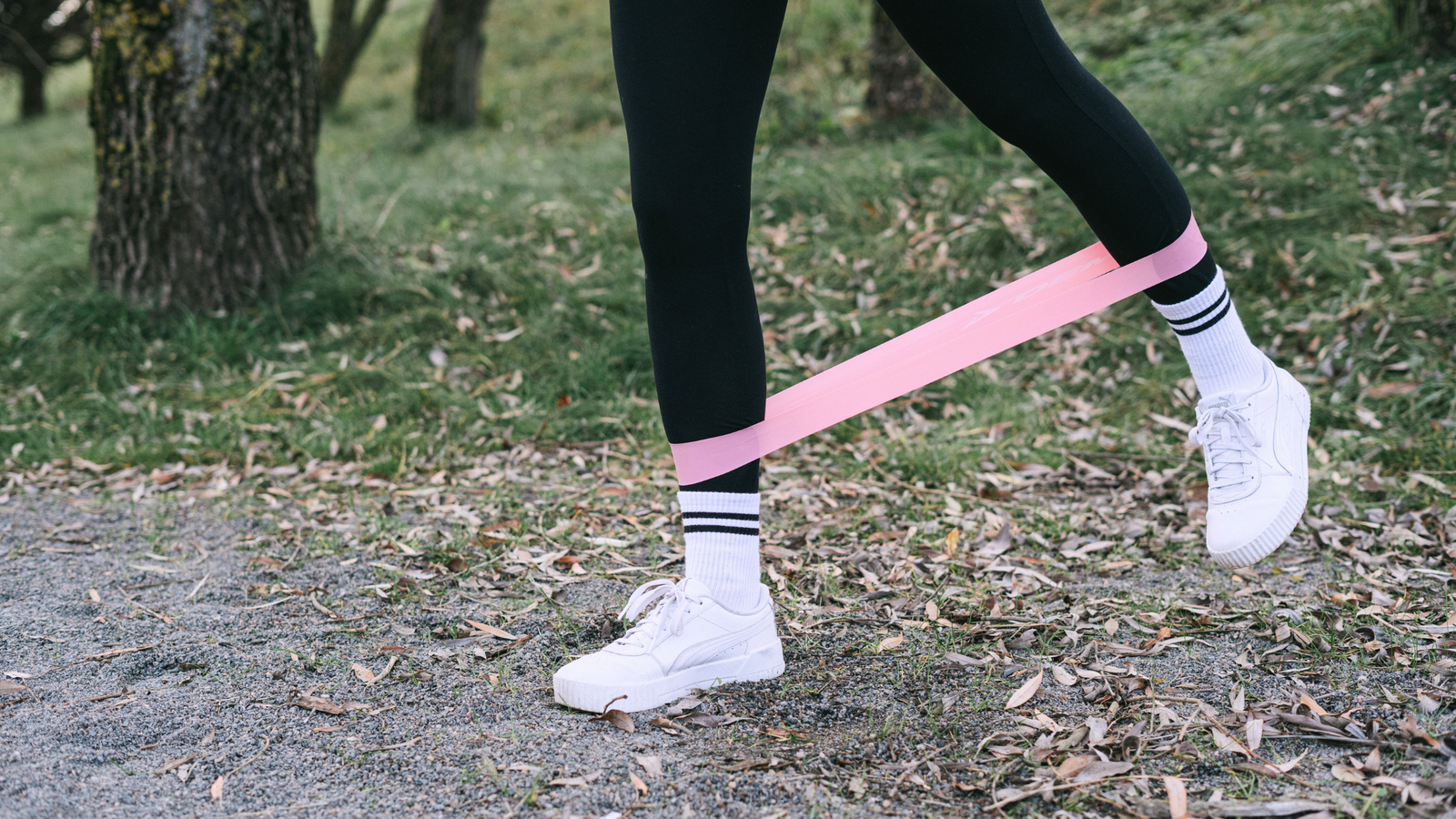
This is the most important thing you can do for IT band syndrome. Weak glute med and hip abductor muscles are the most common driver of ITBS. When they’re not doing their job, the IT band picks up the slack on every single step. The exercises that make the biggest difference: clamshells, lateral band walks, fire hydrants, hip abduction, and single-leg glute bridges. Resistance bands make all of these more effective.
Resistance Bands for Glute Work
Loop bands are the most effective tool for the glute med exercises that actually fix IT band syndrome — clamshells, lateral walks, fire hydrants. A set with multiple resistance levels lets you progress over time, which is key. These are a staple in any runner’s rehab kit.
Shop on Amazon → Affiliate link — I earn a small commission at no extra cost to you. I only share products I personally use and trust. 🤍🦵 Foam rolling
While you can’t stretch the IT band directly, you can release the muscles that feed into it and that makes a real difference. The most important areas to target: the TFL (the muscle at the very top of the IT band, near your hip), the glutes, the quads, and the hamstrings. Rolling the side of the leg (the IT band area itself) can also help reduce sensitivity over time, though it’s more uncomfortable than rolling muscle tissue.
Foam rolling before and after runs keeps things moving and reduces the buildup of tightness that triggers flare-ups. Don’t skip it on the days you feel fine, that’s exactly when it’s doing its best work.
The Foam Roller I Actually Use
Firm enough to actually release tight muscles — including the quads and TFL that feed directly into the IT band — without being unbearable. This is part of a non-negotiable daily routine for any runner managing ITBS.
Shop on Amazon → Affiliate link — I earn a small commission at no extra cost to you. I only share products I personally use and trust. 🤍🔫 Massage gun
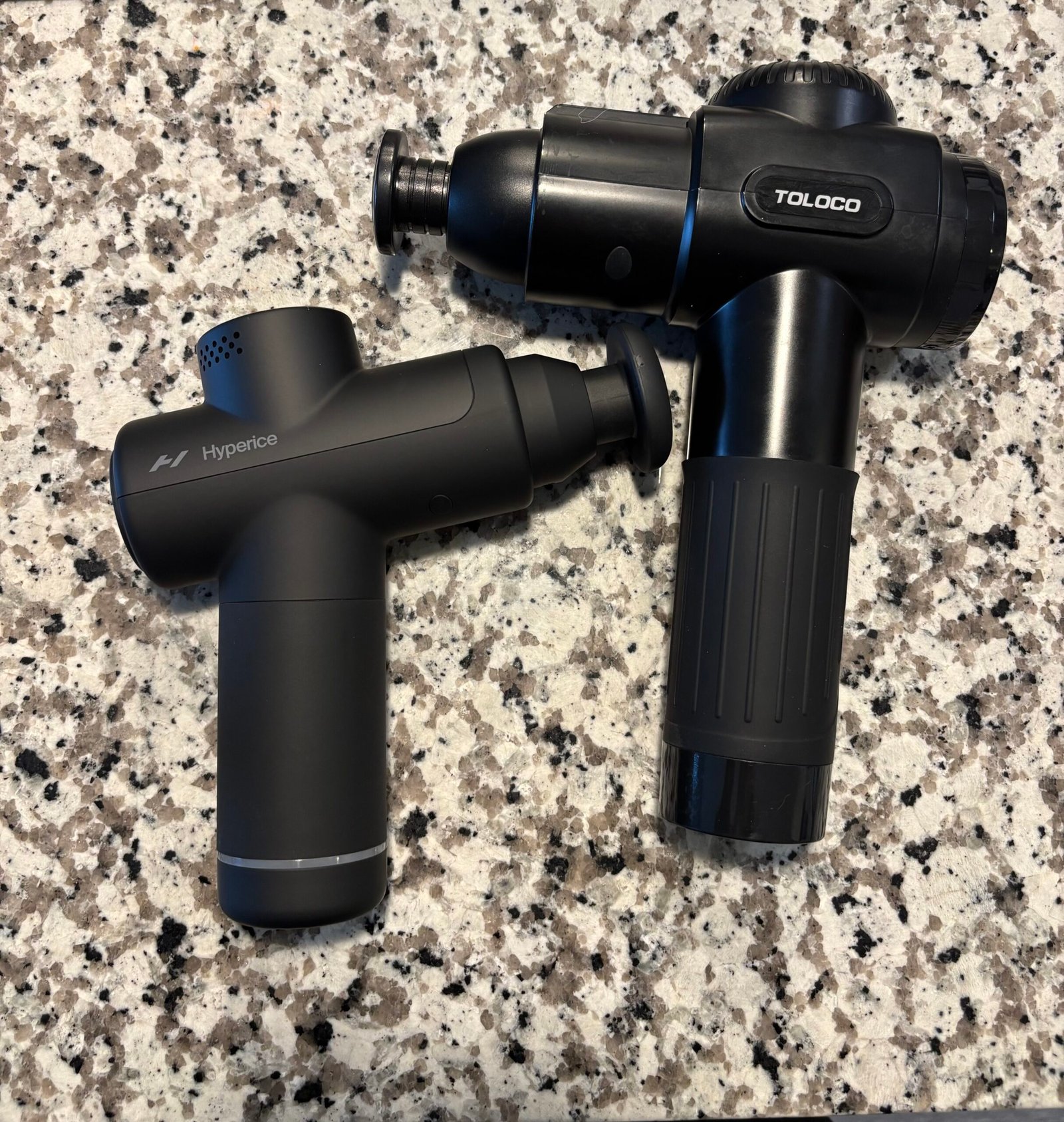
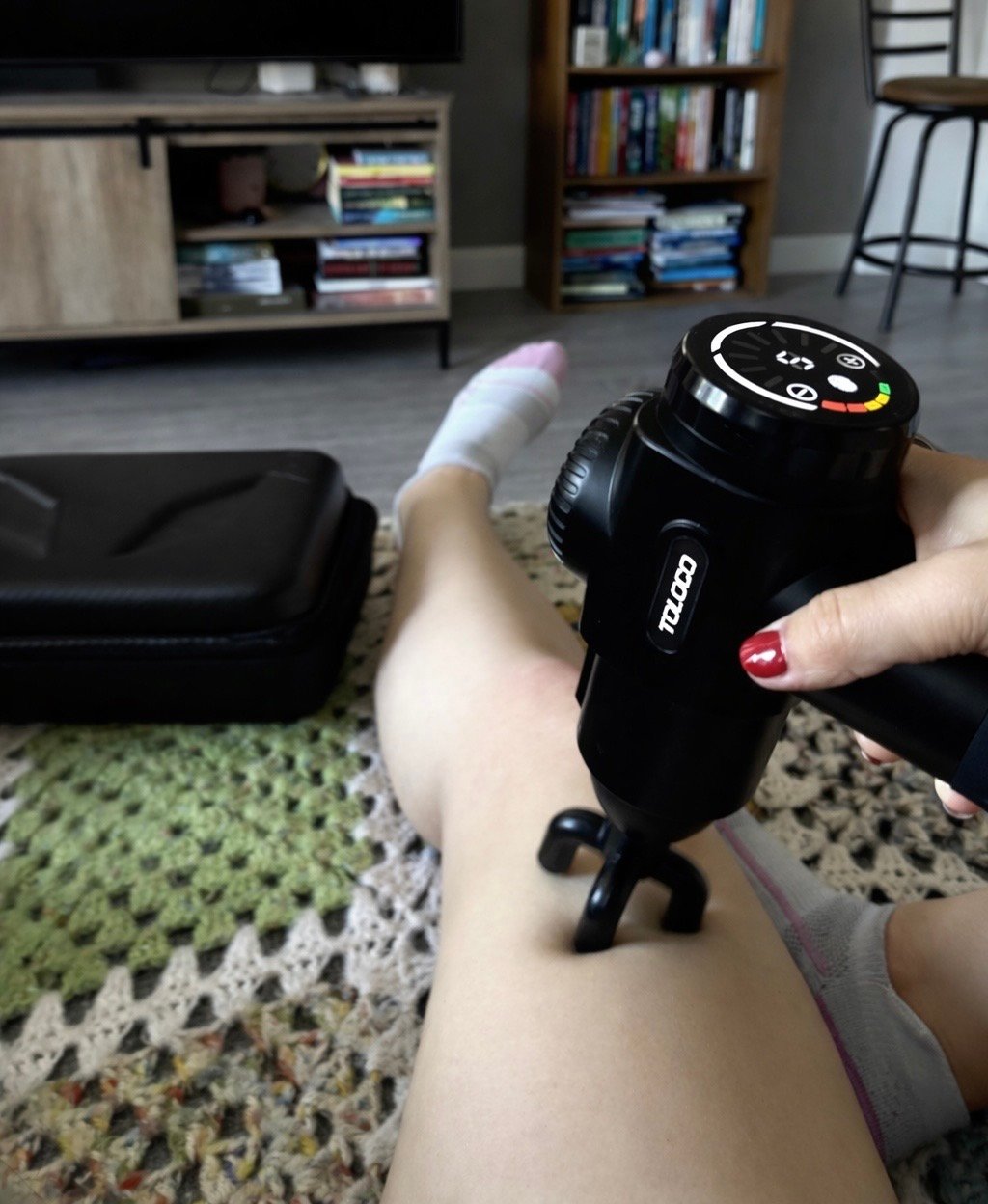
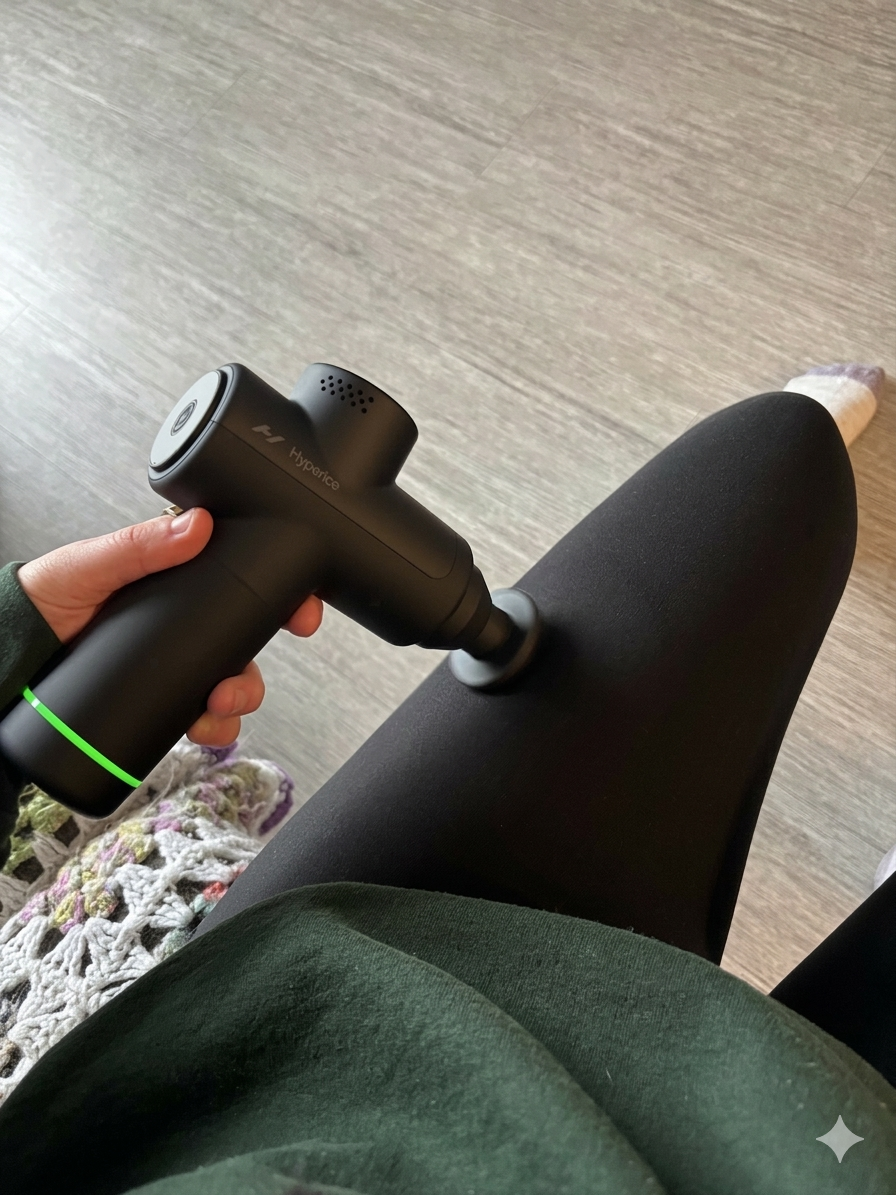
A massage gun takes foam rolling a step further. It’s faster, more targeted, and great for getting into specific tight spots that a roller can’t quite reach. For IT band syndrome specifically, it’s useful on the quads, glutes, and TFL (the muscle at the top of your IT band near the hip). Keep it away from the knee joint itself and stick to the muscle tissue above and around it.
You don’t need to spend a lot to get something effective. A solid budget option works just fine, but if you want something compact and powerful enough to take everywhere, the upgrade is worth it.
🧘 Stretching
Stretching won’t lengthen the IT band itself, but it does help with the surrounding muscles that contribute to the problem. The most effective stretches for ITBS target the glutes, hip flexors, and the TFL. A figure-four stretch (or pigeon pose) for the glutes, a standing IT band side stretch, and a hip flexor lunge stretch are all worth making part of your daily routine, especially after runs when your muscles are warm.
Supportive tools that help (but won’t cure)
These won’t fix IT band syndrome on their own, but they can make day-to-day life and running more manageable while you do the actual work.
IT Band Compression Strap
Worn just above the knee, this applies targeted compression to reduce the friction that causes IT band pain during runs. A different tool than a patellar strap — this one targets the outer knee specifically.
Shop on Amazon → Affiliate link 🤍Arnica Gel
A natural anti-inflammatory applied directly to the outer knee area. Helpful for taking the edge off during flare-ups and as part of a daily recovery routine.
Shop on Amazon → Affiliate link 🤍Hemp Oil Topical
Used alongside arnica, especially after runs and before bed. Helps with soreness and general tension around the knee and outer leg.
Shop on Amazon → Affiliate link 🤍⚡ A note on Voltaren
Voltaren is a topical anti-inflammatory gel that can provide real relief during bad IT band flare-ups — it works by reducing inflammation directly at the site of pain. That said, the same rule applies here as with any injury: this is a flare-up tool, not a daily fix. If you need it every day just to get through a run, that’s a signal to pull back and reassess rather than mask the problem.
Voltaren Topical Gel
Save this for your worst flare-up days when inflammation is high and you need real relief. Apply a small amount directly to the outer knee as directed. Not a substitute for addressing the root cause — but genuinely effective when you need it.
Shop on Amazon → Affiliate link — I earn a small commission at no extra cost to you. I only share products I personally use and trust. 🤍When to see a PT
How to return to running
The most important rule: no pain during the run, and no pain the day after. If either happens, pull back. Returning too fast is the most common reason IT band syndrome keeps coming back.
Walk 30+ minutes pain-free before attempting to run
Start with walk/run intervals — 1 min running, 2 min walking
Gradually increase run intervals as long as you stay pain-free
Short, flat, easy continuous runs only to start
Build mileage slowly — no more than 10% increase per week
Keep doing strength work alongside running — this part doesn’t stop
IT band syndrome doesn’t have to define your season
IT band syndrome is genuinely one of the more stubborn running injuries — but it’s also one of the most manageable when you approach it with consistency. The runners who struggle most are the ones who keep pushing through, rest for a few days, try again, and repeat that cycle indefinitely. The runners who recover are the ones who address the root cause.
Strengthen your glutes. Roll out your TFL. Stretch your hips. Give your body the time it’s asking for. And when you come back, come back slowly. You’ll get there.
You’ve got this. Do the work, trust the process, and keep your eyes on the finish line. 🩷